
 By
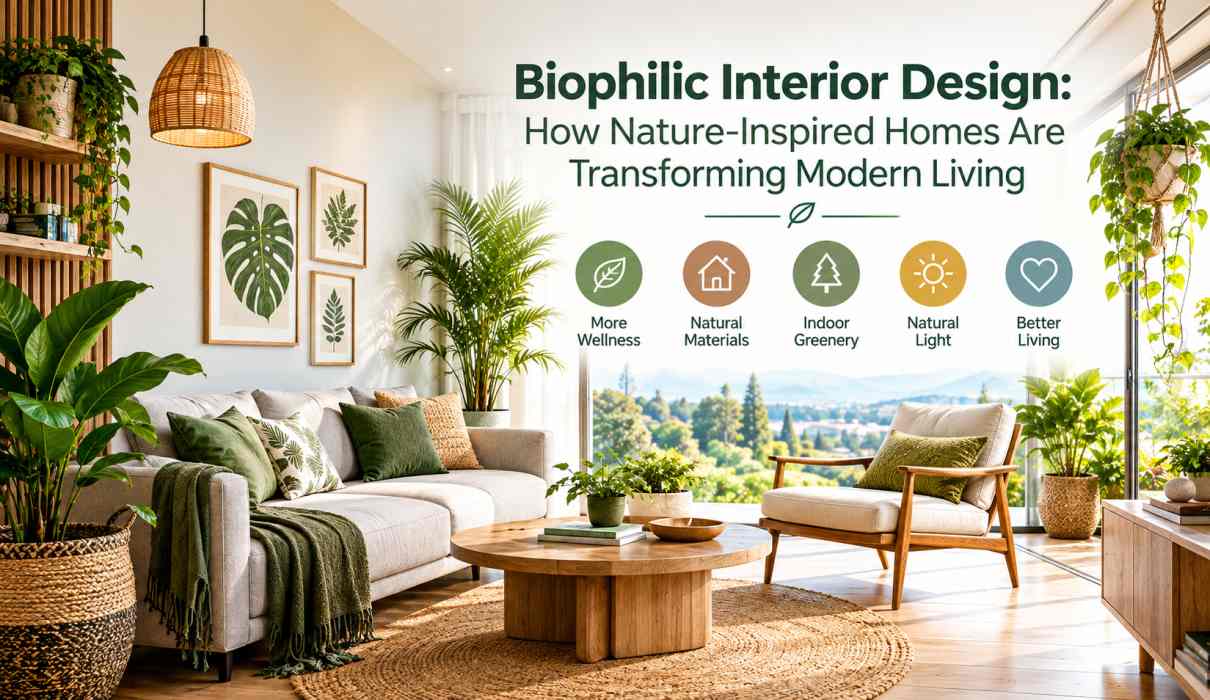
By Biophilic Interior Design: How Nature-Inspired Homes Are Transforming Modern Living
Modern homes are becoming more than just places to live. Homeowners increasingly want interiors that feel comfortable, calming, healthy, functional, and connected to nature. This shift has made biophilic interior design one of the most interesting trends in modern home interiors.
Biophilic design brings elements of nature into indoor spaces through plants, natural materials, daylight, organic shapes, natural colors, fresh air, and views of the outdoors. Instead of creating a home that feels completely separated from its surroundings, this approach aims to create a stronger visual and sensory connection between indoor and outdoor environments.
The concept can work in almost any home, from a compact apartment to a large independent house. It does not necessarily require expensive renovations. Simple changes such as adding indoor plants, using natural textures, improving daylight, or introducing earthy colors can make a noticeable difference.
In this guide, we explore biophilic interior design ideas, its benefits, popular materials and colors, and practical ways to create a nature-inspired home.
What Is Biophilic Interior Design?
Biophilic interior design is an approach to interior planning that incorporates elements of the natural world into built environments.
The word “biophilia” refers broadly to the human tendency to seek connections with nature. In interior design, this idea can be expressed through living plants, natural light, wood, stone, water features, natural ventilation, outdoor views, organic patterns, and nature-inspired colors.
Unlike a particular decorating style, biophilic design is more of a design philosophy. It can be combined with modern, minimalist, traditional, contemporary, Scandinavian, rustic, or luxury interiors.
For example, a minimalist living room can become more nature-oriented by adding a large indoor plant, wooden furniture, linen fabrics, natural daylight, and a neutral earthy color palette.
The goal is to make the interior feel naturally connected, comfortable, and visually balanced.
Why Is Biophilic Interior Design Becoming Popular?
Modern lifestyles often involve long hours indoors. Work, entertainment, shopping, education, and social activities can all take place inside buildings.
As a result, homeowners are looking for ways to introduce more natural elements into everyday environments.
Biophilic interiors can create a softer visual atmosphere compared with spaces dominated by artificial materials and harsh lighting. Plants and natural textures can add warmth, while daylight and outdoor views can make rooms feel more open.
Another reason for the growing interest is flexibility. Biophilic design can be introduced gradually without completely changing an existing interior.
You can start with a few plants, natural fabrics, wooden accessories, or improved lighting and expand the concept over time.
Key Elements of Biophilic Interior Design
Several design elements are commonly associated with nature-inspired interiors.
1. Indoor Plants
Indoor plants are one of the easiest ways to introduce biophilic design into a home.
Plants can add color, texture, and visual interest while making rooms feel more connected to the natural world.
Depending on available space and lighting, homeowners can consider:
- Large floor plants
- Small tabletop plants
- Hanging plants
- Window plants
- Vertical gardens
- Herb gardens
- Balcony plants
Choose plants according to the amount of natural light and maintenance you can realistically provide.
Instead of filling every corner with plants, create intentional green zones. A large plant beside a sofa, a small collection near a window, or a vertical arrangement on a balcony can create a stronger visual effect than random placement.
2. Natural Light
Natural light is an important component of biophilic interior design.
Large windows, glass doors, skylights, and open layouts can help bring daylight deeper into a home.
Where major structural changes are not possible, homeowners can use lighter curtains, mirrors, reflective surfaces, and furniture placement to make better use of existing daylight.
Avoid blocking windows with tall furniture whenever possible.
A well-lit room can also reduce the need for artificial lighting during the daytime and create a more open visual atmosphere.
3. Natural Materials
Materials have a major influence on how a room feels.
Wood, bamboo, stone, rattan, cork, linen, cotton, clay, and natural fibers can introduce organic textures into interiors.
For example, a modern living room can combine:
- Wooden furniture
- Linen cushions
- A jute rug
- Stone accessories
- Woven baskets
- Indoor greenery
The result can feel warmer without losing a contemporary appearance.
Natural materials do not have to dominate the room. Even a few carefully selected pieces can introduce the desired character.
4. Earthy Colors
Color is another effective way to create a nature-inspired interior.
Popular biophilic color palettes include:
- Soft greens
- Olive
- Sage
- Beige
- Cream
- Sand
- Terracotta
- Warm brown
- Muted blue
- Soft gray
Green is especially associated with nature, but an entire room does not need to be green.
A neutral base combined with green plants and wooden textures can create a sophisticated look.
For example, cream walls, light wood furniture, olive cushions, and natural woven accessories can create a calm and contemporary combination.
5. Organic Shapes
Nature rarely consists entirely of perfectly straight lines and sharp geometric forms.
Biophilic interiors can incorporate curved and organic shapes inspired by leaves, stones, waves, branches, and other natural forms.
Consider:
- Curved sofas
- Round coffee tables
- Organic-shaped mirrors
- Arched doorways
- Rounded lighting
- Irregular decorative objects
These details can soften an otherwise highly structured interior.
6. Natural Patterns and Textures
Nature-inspired patterns can be introduced through wallpapers, fabrics, rugs, artwork, and decorative accessories.
Leaf patterns, botanical illustrations, floral motifs, water-inspired designs, and organic textures can reinforce the connection with nature.
Texture is equally important.
A smooth wooden table, woven basket, textured rug, linen curtain, and stone accessory can create visual variety without requiring bright colors.
Biophilic Living Room Ideas
The living room is often the best place to introduce nature-inspired interior design because it is a central space in the home.
Start with a neutral base and add greenery through plants.
A wooden coffee table, natural-fiber rug, woven baskets, linen curtains, and comfortable fabric seating can create a warm atmosphere.
If the room has large windows, position seating so that occupants can enjoy outdoor views.
You can also create a small indoor garden corner using different plant heights. Combine a tall floor plant with medium-sized pots and smaller plants on a shelf.
Avoid overcrowding the room. The goal is to create a balanced connection with nature rather than turning the living room into a greenhouse.
Biophilic Bedroom Design Ideas
The bedroom should feel comfortable and uncluttered.
Natural fabrics such as cotton and linen can introduce softness. Wooden bedside tables, neutral bedding, subtle botanical artwork, and a few carefully selected plants can create a relaxing environment.
Use softer shades such as beige, muted green, warm white, or earthy brown.
Avoid excessive decoration. A simple bedroom with natural textures can often achieve a stronger biophilic effect than a room filled with numerous accessories.
If your bedroom has a balcony or garden view, keep windows visually accessible rather than blocking them with heavy furniture.
Nature-Inspired Kitchen Design
Biophilic design can also work beautifully in kitchens.
Wooden cabinets, natural stone surfaces, ceramic accessories, indoor herbs, and earthy colors can introduce organic elements.
A small herb garden near a well-lit kitchen window can be both decorative and practical.
Open shelving can display wooden boards, ceramic dishes, woven baskets, and plants. However, maintain enough clear workspace to keep the kitchen functional.
Combining natural materials with modern appliances can create a contemporary kitchen that feels warm rather than overly industrial.
Biophilic Bathroom Ideas
Bathrooms can benefit from nature-inspired materials and colors.
Consider stone-look surfaces, wood-effect cabinetry, green accents, natural textures, and moisture-tolerant plants where suitable.
Plants that thrive in humid environments can work well if the available light and conditions are appropriate.
Natural daylight through windows or skylights can make a bathroom feel more spacious.
For smaller bathrooms, use a few carefully selected natural elements instead of trying to introduce too many decorative features.
Biophilic Design for Small Apartments
You do not need a large home to create a biophilic interior.
Small apartments can incorporate nature through vertical solutions.
Try:
- Hanging plants
- Wall-mounted planters
- Small balcony gardens
- Wooden furniture
- Botanical artwork
- Natural-fiber rugs
- Light-colored walls
- Mirrors near windows
- Compact indoor herb gardens
Use furniture with multiple functions to keep the space uncluttered.
A narrow wooden console with a few plants can create a simple nature-inspired feature without consuming much floor space.
Sustainable Materials and Responsible Design
Biophilic design and sustainability can complement each other, although they are not exactly the same concept.
Choosing durable furniture, repairing rather than replacing items, using responsibly sourced materials where possible, and selecting long-lasting finishes can support more sustainable interiors.
Homeowners can also consider energy-efficient lighting, natural ventilation, efficient appliances, water-saving fixtures, and appropriate window treatments.
The best sustainable interior is not necessarily the one filled with expensive eco-friendly products. Thoughtful consumption and long-term usability are equally important.
Benefits of Biophilic Interior Design
Nature-inspired interiors can offer several practical and aesthetic benefits.
Creates a Calmer Atmosphere
Natural colors, plants, daylight, and organic textures can make an interior feel softer and more visually relaxing.
Adds Visual Warmth
Wood, woven materials, natural fabrics, and greenery can prevent modern interiors from feeling cold or overly mechanical.
Improves Connection With the Outdoors
Windows, balconies, plants, and outdoor views can create stronger visual relationships between indoor and outdoor spaces.
Makes Interiors More Personal
Plants, natural objects, handmade ceramics, wooden furniture, and botanical artwork can give a home a distinctive character.
Supports Functional Living
When combined with good ventilation, appropriate daylight, practical layouts, and comfortable materials, biophilic design can contribute to a more pleasant everyday environment.
It is important, however, not to treat biophilic design as a substitute for professional medical or mental-health care. Its primary role is creating thoughtfully designed living environments.
Common Biophilic Interior Design Mistakes
While adding natural elements sounds simple, a few mistakes can reduce the overall effect.
Too Many Plants
More plants do not automatically create better design. Excessive greenery can make a room feel crowded and increase maintenance.
Poor Plant Selection
A plant that cannot survive the available light or humidity may quickly become difficult to maintain. Select plants according to actual indoor conditions.
Mixing Too Many Materials
Combining wood, stone, bamboo, rattan, metal, glass, and multiple patterns can create visual clutter. Choose a few complementary materials.
Ignoring Functionality
A beautiful room is not successful if it is difficult to use. Furniture placement, storage, lighting, and movement should remain practical.
Overusing Green
Biophilic design is not synonymous with green interiors. Neutral colors, wood, stone, natural textiles, and daylight can provide the same connection without overwhelming the space.
How to Create a Biophilic Home on a Budget
Creating a nature-inspired home does not require a complete renovation.
Start with small changes.
Replace synthetic decorative accessories with natural textures. Add one or two indoor plants. Introduce a wooden tray, woven basket, cotton cushion covers, or a natural-fiber rug.
Rearrange furniture to make better use of natural light.
Use curtains that allow daylight to enter while providing privacy.
Add botanical prints or nature-inspired artwork.
If you have a balcony, transform part of it into a small green corner with suitable plants and simple seating.
These affordable changes can gradually transform the atmosphere without requiring a major interior-design budget.
The Future of Biophilic Interior Design
The future of home interiors is likely to place increasing emphasis on comfort, functionality, sustainability, technology, and connection with nature.
Biophilic design fits naturally into this direction because it can be adapted to different lifestyles and architectural styles.
Future homes may increasingly combine smart-home systems with natural materials, energy-efficient technologies with better daylight management, and compact urban layouts with indoor greenery.
The emphasis will not simply be on decorating homes with plants. Instead, successful biophilic interiors will consider the complete relationship between people, architecture, natural elements, light, air, materials, and outdoor spaces.
Conclusion
Biophilic interior design offers a practical way to bring nature closer to everyday life. Through plants, natural light, earthy colors, organic shapes, wood, stone, natural fabrics, and outdoor connections, homeowners can create spaces that feel warm, comfortable, and visually refreshing.
The approach is flexible enough for large houses, modern apartments, compact bedrooms, kitchens, bathrooms, balconies, and work-from-home spaces. It also works with different decorating styles, from minimalist and contemporary to rustic and luxury interiors.
You do not need to redesign your entire home to embrace the trend. Start with simple improvements that fit your space and lifestyle. Add greenery, improve natural light, introduce natural textures, reduce clutter, and choose materials that feel comfortable and durable.
Ultimately, the best nature-inspired home interior is one that looks beautiful while remaining functional and easy to live in. By thoughtfully connecting indoor spaces with the natural world, biophilic design can help create homes that feel more welcoming, balanced, and connected to modern living.