
 By
By Below is a ready-to-publish, SEO-friendly blog article of approximately 1,900 words, written for the 2026 residential real estate market.
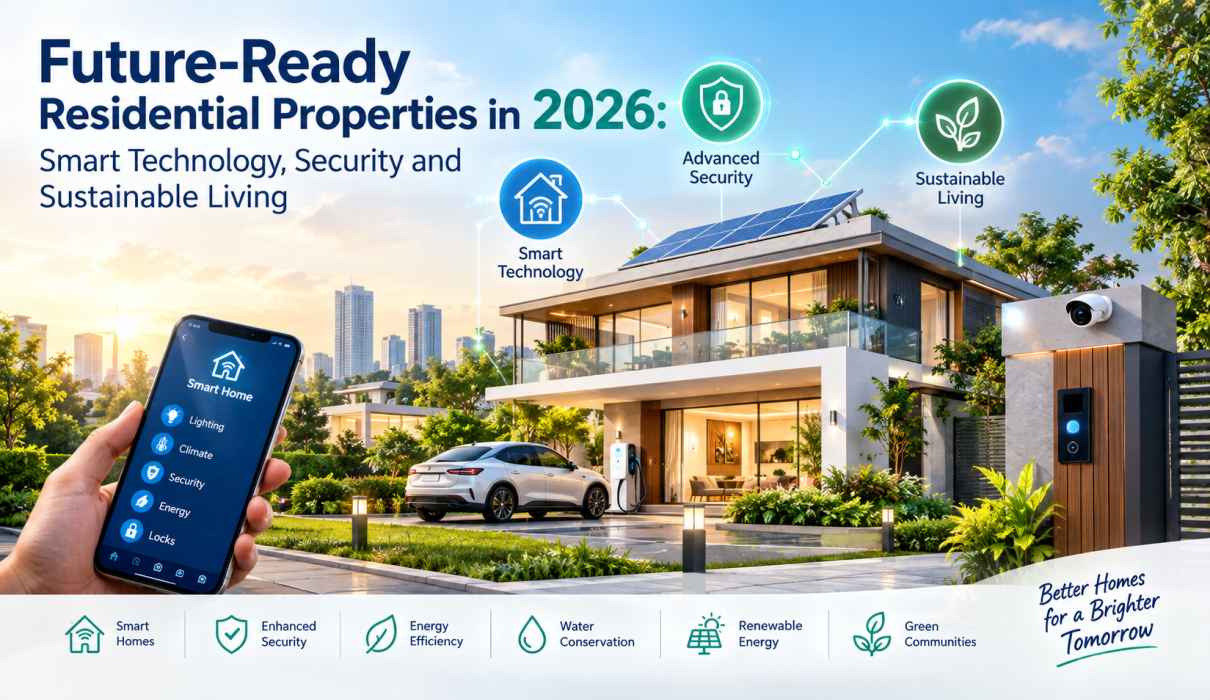
Future-Ready Residential Properties in 2026: Smart Technology, Security and Sustainable Living
The residential property market is changing rapidly as homebuyers look beyond location, size and traditional amenities. In 2026, a modern home is increasingly expected to offer smart technology, advanced security, energy efficiency, sustainability and lifestyle-focused features. These changes are transforming the concept of residential properties and creating a new generation of future-ready homes.
In India, the residential real estate sector continues to evolve alongside urbanisation, infrastructure development and changing buyer expectations. Industry outlooks for 2026 highlight stronger interest in premium homes, lifestyle-led communities, technology-enabled properties and sustainable housing.
A future-ready residential property is not simply a home with a few smart devices. It is a thoughtfully designed living environment that can adapt to changing technology, environmental conditions, security requirements and lifestyle needs.
What Are Future-Ready Residential Properties?
Future-ready residential properties are homes designed to remain functional, efficient and relevant as technology and consumer expectations evolve. They combine modern architecture with digital connectivity, intelligent automation, security systems, energy-efficient infrastructure and environmentally responsible features.
These properties may include smart lighting, automated climate control, connected appliances, digital door locks, video surveillance, energy-monitoring systems, solar power, water-saving technologies and intelligent home management platforms.
The concept also extends beyond the individual apartment or house. Modern residential developments increasingly focus on green spaces, wellness amenities, community infrastructure, sustainable construction and professionally managed services.
This shift reflects a broader change in homebuyer priorities. According to Colliers’ 2026 India outlook, lifestyle and sustainability-led housing preferences are expected to gain momentum, with buyers showing interest in green homes, energy-efficient materials, gated communities, villas and wellness-oriented living environments.
Why Future-Ready Homes Matter in 2026
Technology is becoming a fundamental part of everyday life. People use connected devices for communication, entertainment, shopping, banking and work, so it is natural that these expectations are moving into residential spaces.
At the same time, rising energy costs, environmental concerns and increasing awareness of resource efficiency are encouraging homeowners to consider properties that can reduce energy and water consumption.
Security is another major consideration. Homeowners increasingly want convenient ways to monitor their properties, control access and receive alerts when unusual activity occurs.
The result is a new residential property model where comfort, convenience, security and sustainability work together.
Technology is also influencing the wider real estate value chain. KPMG notes that technology is increasingly becoming a foundational layer across planning, development, transactions and asset management in India’s real estate sector.
1. Smart Home Technology
Smart technology is one of the most visible characteristics of a future-ready home.
Smart homes use connected devices and sensors that allow residents to monitor or control different aspects of their property through smartphones, voice assistants, automated systems or centralised platforms.
Common smart-home features include:
- Smart lighting systems
- Automated curtains and blinds
- Smart thermostats and climate controls
- Connected kitchen appliances
- Smart televisions and entertainment systems
- Automated irrigation
- Smart electricity monitoring
- Digital door locks
- Video doorbells
- Connected security cameras
For example, residents can switch lights on or off remotely, check whether doors are locked or monitor selected areas of their property through a mobile application.
The Indian smart-home market is also gaining momentum. Deloitte India has highlighted strong growth expectations for smart-home technology, alongside increasing demand for AI-enabled devices, sensor-based lighting and energy-efficient housing solutions.
2. AI-Powered Residential Living
Artificial intelligence is expected to make smart homes more intelligent rather than simply connected.
Traditional smart devices generally follow predefined instructions. AI-powered systems can potentially learn usage patterns and make recommendations or automate actions based on household behaviour.
For instance, an intelligent home system could learn when residents normally use lighting, adjust temperature settings according to preferences, identify unusual energy consumption or provide reminders about appliances.
AI can also support predictive maintenance. Instead of waiting for a household appliance or building system to fail, connected sensors may identify unusual performance patterns and alert residents or facility managers.
Over time, AI could become an invisible layer operating behind the home, coordinating energy, security, comfort and maintenance.
However, homeowners should also consider privacy and cybersecurity when adopting connected technologies. Smart devices can collect significant amounts of household data, making secure networks, strong passwords, software updates and trusted manufacturers important considerations.
3. Advanced Home Security
Security is another defining feature of future-ready residential properties.
Modern residential projects are increasingly incorporating multiple layers of security instead of relying exclusively on traditional locks and security guards.
Potential features include:
- Smart locks
- Biometric access
- Video doorbells
- AI-assisted surveillance
- Motion sensors
- Smart alarms
- Visitor management systems
- Emergency alerts
- Remote security monitoring
- Controlled access for residential communities
Smart locks can allow authorised residents to enter without traditional keys, while digital access systems can help property managers control entry to shared facilities.
For apartment developments, integrated visitor-management platforms can also make it easier to verify guests, delivery personnel and service providers.
Deloitte reports that India’s home-security market, including smart locks, cameras and hazard-prevention devices, is expected to expand significantly through 2030.
The objective is not to eliminate human security but to combine professional security services with technology for stronger monitoring and faster responses.
4. Sustainable and Energy-Efficient Homes
Sustainability is moving from an optional feature to an increasingly important residential property consideration.
Future-ready homes can incorporate technologies and construction practices designed to reduce energy consumption and environmental impact.
Important features may include:
- Solar panels
- Energy-efficient lighting
- High-performance insulation
- Efficient air-conditioning systems
- Low-energy appliances
- Rainwater harvesting
- Water-efficient fixtures
- Waste segregation
- Natural ventilation
- Energy-monitoring systems
- Green landscaping
Energy efficiency can provide two major advantages. First, it can reduce the environmental footprint of a property. Second, it can potentially reduce recurring household operating costs.
Colliers identifies green homes, energy-efficient construction materials and climate-resilient communities as important themes for India’s residential sector in 2026 and beyond.
Sustainable design is therefore becoming part of the long-term value proposition of residential properties.
5. Renewable Energy and Smart Energy Management
Solar power is becoming increasingly relevant for residential developments, particularly in areas with suitable sunlight conditions.
A future-ready property may combine rooftop solar generation with energy-efficient appliances, battery storage where practical, and digital energy monitoring.
Smart meters and energy-management systems can help residents understand where electricity is being consumed. This information can encourage more efficient behaviour and identify areas where energy usage can be reduced.
Large residential communities can also explore common-area solar power, efficient lighting systems and automated energy management.
The long-term objective is to create homes that consume fewer resources while maintaining comfort and convenience.
6. Water Conservation and Resource Management
Water management is another important component of sustainable residential development.
Future-ready properties can incorporate rainwater harvesting, wastewater treatment, low-flow fixtures, smart irrigation and water monitoring systems.
Technology can help identify abnormal consumption or potential leaks before they become major problems.
Landscaping can also be designed around native or low-water plants, reducing irrigation requirements while maintaining attractive outdoor spaces.
For large residential communities, efficient water management can become particularly important because thousands of residents may collectively consume significant quantities of water.
7. Smart Communities, Not Just Smart Homes
The future of residential real estate is not limited to individual apartments.
Developers are increasingly creating communities where technology connects homes with shared infrastructure and services.
A smart residential community could offer:
- Digital visitor management
- Smart parking
- Connected elevators
- App-based facility bookings
- Community communication platforms
- Smart waste management
- EV charging
- Energy monitoring
- Intelligent street lighting
- Automated maintenance requests
This approach can improve convenience while helping property managers operate large developments more efficiently.
The idea of a future-ready property is therefore expanding from a “smart apartment” to a smart residential ecosystem.
8. Electric Vehicle-Friendly Residential Properties
The growth of electric mobility is also influencing residential development.
Homebuyers may increasingly consider EV charging availability when selecting apartments, villas or gated communities.
Future-ready developments can include dedicated charging points, electrical infrastructure capable of supporting additional chargers and smart charging management.
Developers may also design parking areas with provisions for future EV adoption rather than treating charging infrastructure as an afterthought.
As electric vehicles become more common, EV-ready infrastructure could become an important differentiator between older and newer residential properties.
9. Wellness-Focused Residential Design
Modern buyers are increasingly interested in homes that support physical and mental well-being.
Future-ready residential projects may therefore include more than gyms and swimming pools. They can incorporate natural lighting, ventilation, landscaped areas, walking paths, outdoor recreation zones, quiet spaces and wellness-oriented amenities.
The emphasis is shifting from simply providing a large apartment to creating a healthier living environment.
Industry commentary on India’s 2026 residential market points toward greater demand for lifestyle and experience-led communities, where green spaces and community amenities form an important part of the housing proposition.
10. Flexible Spaces for Modern Lifestyles
The traditional separation between home and workplace has changed considerably.
Many homeowners now expect residential properties to support multiple activities, including remote work, online learning, entertainment, fitness and social interaction.
Future-ready homes can respond through flexible floor plans, dedicated workspaces, multipurpose rooms and better connectivity.
A spare bedroom may function as an office, study area, guest room or creative space depending on the family’s needs.
Flexible design can make a property useful for a longer period, particularly as household requirements change.
11. Technology-Enabled Property Buying
Technology is transforming not only the home itself but also the way buyers discover and purchase residential properties.
Digital property platforms, virtual tours, online documentation, location analytics and AI-powered search tools can make the property-buying journey more convenient.
Potential buyers can compare projects, explore floor plans, review amenities and investigate locations without visiting every property physically.
Technology can also support developers and agents through better customer communication, lead management, property recommendations and data analysis.
As digital adoption increases, buyers are likely to expect a more transparent and convenient property-buying experience.
12. What Homebuyers Should Look for in 2026
Buying a future-ready property requires more than checking whether a project has a “smart home” label.
Homebuyers should evaluate the actual technology and infrastructure behind the marketing.
Important questions include:
Is the technology useful?
A long list of smart devices does not necessarily mean a home is intelligent. Buyers should focus on features that provide meaningful convenience, security or efficiency.
Can the system be upgraded?
Technology changes quickly. Open and upgradeable systems can be more valuable than systems that become obsolete after a few years.
Is cybersecurity considered?
Connected homes should have appropriate security protections, software updates and reliable device management.
How much energy can the property save?
Look for measurable energy-efficiency features rather than vague sustainability claims.
Is the infrastructure future-ready?
EV charging, high-speed connectivity, renewable energy and efficient utilities can increase long-term usefulness.
What are the maintenance costs?
Advanced technology may require subscriptions, servicing or replacement. Buyers should understand these costs before purchasing.
Challenges of Future-Ready Residential Properties
Despite their benefits, smart and sustainable homes also have challenges.
The first is higher initial cost. Advanced systems, energy-efficient materials and premium infrastructure may increase construction or purchase prices.
The second is technology obsolescence. Devices and software can become outdated, requiring upgrades.
Privacy is another concern. Connected devices can generate household data, making responsible data management essential.
There can also be interoperability issues when devices from different manufacturers do not communicate effectively.
Finally, sustainability should not become purely a marketing term. Buyers should look for practical evidence of energy efficiency, water management, construction quality and environmental performance.
Industry discussions in India also highlight rising construction costs and regulatory and affordability challenges, meaning future-ready development must balance innovation with accessibility.
The Future of Residential Properties
The residential property market is moving toward a more integrated model in which technology, sustainability, security and lifestyle work together.
Future homes will likely become more connected, energy-efficient and adaptable. AI may help automate everyday tasks, while smart security systems can improve monitoring. Renewable energy and resource-efficient infrastructure can support more sustainable living.
At the community level, smart parking, EV charging, digital services, green spaces and efficient utilities can create better residential environments.
At the same time, the best future-ready homes will not necessarily be the ones with the largest number of gadgets. They will be the properties where technology solves real problems and sustainability improves long-term efficiency without compromising comfort.
Conclusion
Future-ready residential properties in 2026 represent a major evolution in the way people think about modern housing. Smart technology, AI, advanced security, renewable energy, water conservation, wellness amenities and flexible spaces are becoming increasingly important elements of residential design.
For buyers, the goal should be to look beyond attractive features and evaluate the property’s long-term functionality, technology infrastructure, sustainability, security and operating costs.
For developers, the opportunity is to create homes that are not only visually appealing but also intelligent, efficient, secure and adaptable.
As India’s residential sector continues to modernise, future-ready housing is likely to become an increasingly important part of the real estate landscape. The homes that combine smart living, strong security and sustainable design can offer a more comfortable and resilient lifestyle while remaining better prepared for the demands of the future.