
 By
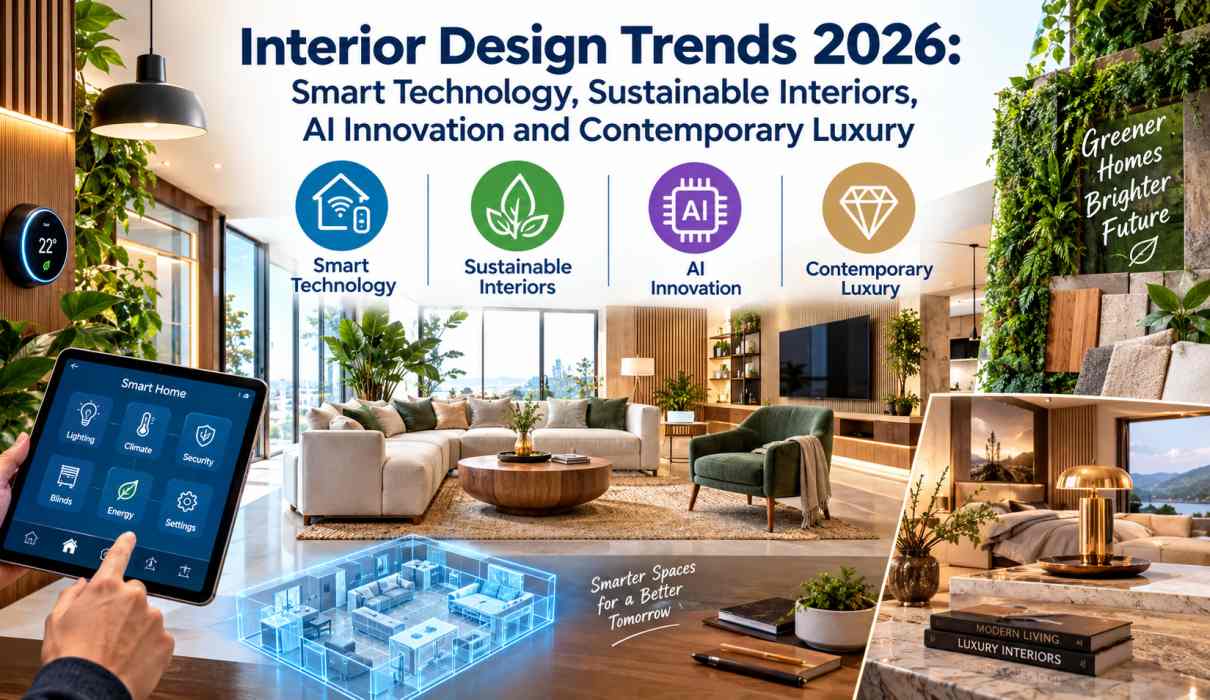
By Interior Design Trends 2026: Smart Technology, Sustainable Interiors, AI Innovation and Contemporary Luxury
Interior design is entering an exciting new phase in 2026. Homes, offices, hotels, restaurants, and commercial spaces are becoming more intelligent, sustainable, personalized, and experience-driven. While aesthetics remain important, modern interior design is increasingly focused on how a space performs, feels, adapts, and supports everyday life.
The interior design trends of 2026 combine smart technology, sustainable materials, artificial intelligence, natural elements, flexible layouts, and contemporary luxury. Instead of following one fixed style, homeowners and designers are creating spaces that reflect individual personalities while offering greater comfort, efficiency, and functionality.
Technology is becoming more integrated into interiors without necessarily dominating the visual design. At the same time, sustainable choices are moving beyond a niche concept and becoming an important part of material selection, energy efficiency, durability, and responsible living.
From AI-assisted room planning to smart lighting, natural materials, multifunctional furniture, and refined luxury, the future of interior design is about creating spaces that are beautiful while also being practical and adaptable.
1. Smart Technology Becomes Part of Interior Design
One of the most important interior design trends in 2026 is the integration of smart technology into everyday spaces.
Smart homes are no longer limited to voice-controlled speakers or connected televisions. Modern interiors can incorporate intelligent lighting, automated curtains, smart thermostats, security systems, connected appliances, air-quality monitors, and energy-management solutions.
The key design trend is subtle integration. Instead of making technology the visual focus, designers are increasingly looking for ways to hide or blend devices into the architecture.
Examples include:
- Automated lighting systems
- Smart switches and controls
- Motorized curtains and blinds
- Connected thermostats
- Smart security systems
- Intelligent appliances
- Automated ventilation
- Smart entertainment systems
- Energy-monitoring devices
Smart technology can also improve accessibility and convenience. Lighting scenes can be adjusted for different activities, while automated systems can help manage temperature, privacy, and energy use.
The result is an interior that responds more naturally to the needs of its occupants.
2. AI Is Transforming Interior Design
Artificial intelligence is becoming one of the most interesting tools available to interior designers and homeowners.
AI-powered design tools can help generate concepts, explore color combinations, visualize furniture arrangements, create mood boards, and experiment with different interior styles.
Instead of manually creating every design variation, designers can use AI to explore multiple possibilities quickly.
For example, a homeowner could provide information about a room’s dimensions, preferred style, color palette, furniture requirements, and budget. AI-assisted software can then generate conceptual ideas that can be refined by a professional designer.
AI can be useful for:
- Room visualization
- Furniture placement
- Color palette development
- Material combinations
- Mood-board creation
- Style exploration
- Space planning
- Design inspiration
However, AI does not replace professional creativity or technical knowledge. Building regulations, electrical requirements, structural limitations, ergonomics, lighting conditions, material performance, and construction details still require human expertise.
The most effective approach is likely to combine AI innovation with professional interior design knowledge.
3. Sustainable Interiors Become a Long-Term Priority
Sustainability is no longer simply an additional feature in interior design. It is becoming an important consideration throughout the design process.
In 2026, sustainable interiors focus on selecting materials and products that can provide long-term value while reducing unnecessary environmental impact.
Popular approaches include:
- Recycled and reclaimed materials
- Responsibly sourced wood
- Low-emission paints and finishes
- Natural fabrics
- Durable flooring
- Energy-efficient lighting
- Long-lasting furniture
- Locally sourced materials
- Reusable or adaptable products
Sustainability also means avoiding unnecessary replacement. A well-designed room with durable materials and timeless furniture can remain useful for many years.
Rather than constantly following short-lived trends, homeowners are increasingly interested in interiors that can evolve gradually.
4. Contemporary Luxury Moves Toward Comfort
Luxury interior design is also changing.
Traditional luxury often emphasized highly decorative furniture, elaborate finishes, and visibly expensive materials. Contemporary luxury takes a more sophisticated approach.
The emphasis is increasingly placed on:
- Quality
- Comfort
- Craftsmanship
- Proportion
- Natural materials
- Custom details
- Functional design
- Calm environments
This creates spaces that feel refined without being excessively decorated.
A luxury living room, for example, might combine custom furniture, natural stone, textured fabrics, carefully designed lighting, and handcrafted accessories rather than filling the room with decorative objects.
This concept is often associated with understated or quiet luxury, where the quality of materials and craftsmanship creates visual richness without excessive ornamentation.
5. Biophilic Design Brings Nature Indoors
The connection between nature and interior spaces remains a major trend in 2026.
Biophilic interior design incorporates natural elements to create environments that feel connected to the outdoors.
This can include:
- Indoor plants
- Natural wood
- Stone surfaces
- Water features
- Natural textures
- Large windows
- Outdoor views
- Daylight-focused layouts
- Earth-inspired colors
Biophilic design does not necessarily mean filling every room with plants. It can also involve the use of natural textures, organic shapes, daylight, ventilation, and views of gardens or outdoor landscapes.
For urban homes, these elements can help create a stronger connection with nature even when outdoor space is limited.
6. Natural Materials and Organic Textures Gain Popularity
Interior design in 2026 is moving toward materials that provide warmth and tactile character.
Wood, stone, linen, cotton, wool, rattan, ceramics, and other natural-looking materials can add depth to interiors.
Texture is particularly important because it prevents neutral spaces from appearing flat.
A room with a simple color palette can become visually interesting through combinations of:
- Rough stone
- Smooth wood
- Soft upholstery
- Woven textiles
- Handcrafted ceramics
- Textured walls
- Natural fibers
This approach creates interiors that feel comfortable and authentic rather than overly artificial.
7. Multifunctional Spaces Become Essential
Modern homes need to accommodate more activities than ever.
A single room may function as a workspace, entertainment area, study zone, guest room, or exercise space depending on the time of day.
This is increasing demand for multifunctional interior design.
Designers are using:
- Modular furniture
- Foldable desks
- Built-in storage
- Sliding partitions
- Convertible sofas
- Flexible lighting
- Movable furniture
- Multi-purpose rooms
The objective is to make limited space more useful without making it feel crowded.
In smaller apartments, clever storage and flexible furniture can make a significant difference.
8. Smart Lighting Becomes a Design Feature
Lighting is one of the most powerful elements of interior design, and smart lighting systems are expanding its possibilities.
Modern lighting can be programmed to support different activities and moods.
A living room could have bright lighting for cleaning, softer illumination for evening relaxation, and focused lighting for reading.
Smart lighting can include:
- Dimmable fixtures
- Automated scenes
- Motion sensors
- Color-temperature adjustment
- App-based controls
- Voice controls
- Energy-efficient LED systems
However, good lighting design still depends on fundamental principles such as layering.
Ambient, task, and accent lighting can work together to create a balanced interior.
9. Personalized Interiors Replace Generic Design
Another major trend is personalization.
Homeowners increasingly want spaces that reflect their interests, lifestyles, memories, and cultural backgrounds.
Instead of copying a showroom or social-media image exactly, people are combining different influences to create unique interiors.
Personalization can include:
- Custom furniture
- Family artwork
- Travel collections
- Handmade accessories
- Bespoke cabinetry
- Personalized color palettes
- Local crafts
- Statement artwork
The result is a home that feels lived-in and individual.
This approach also supports sustainable design because existing furniture, artwork, and meaningful objects can be incorporated into new interiors rather than discarded.
10. Earthy and Sophisticated Color Palettes
Color trends in 2026 are increasingly focused on creating calm and adaptable environments.
Earth-inspired colors such as warm beige, clay, olive, muted green, terracotta, brown, cream, and soft natural tones can create a comfortable foundation.
These colors can be combined with stronger accent shades when homeowners want additional personality.
The trend is not necessarily about avoiding bright colors. Instead, designers are becoming more thoughtful about where and how strong colors are used.
An accent wall, artwork, furniture piece, rug, or decorative object can introduce color without overwhelming the entire room.
11. Curved Forms and Organic Shapes
Straight lines remain fundamental to architecture and furniture, but softer forms are increasingly appearing in contemporary interiors.
Curved sofas, rounded tables, arched doorways, circular mirrors, organic rugs, and sculptural lighting can soften a room’s appearance.
Organic shapes can also create a more relaxed visual experience.
The trend works particularly well when balanced with architectural lines. A curved sofa against a clean architectural background, for example, can create an interesting contrast.
12. Home Offices Become More Refined
Remote and hybrid working have changed the way people think about home workspaces.
Instead of treating a home office as a temporary desk in a spare corner, homeowners are increasingly creating dedicated environments designed for concentration and comfort.
A modern home office may include:
- Ergonomic furniture
- Adjustable lighting
- Acoustic treatments
- Built-in storage
- Cable management
- Video-conferencing equipment
- Decorative elements
- Natural materials
The goal is to create a professional workspace that still feels connected to the home.
For smaller properties, multifunctional furniture can allow a workspace to disappear or transform when the working day ends.
13. Wellness-Focused Interior Design
Wellness is becoming another important consideration in residential interiors.
A wellness-focused home can incorporate design decisions that support relaxation and everyday comfort.
Examples include:
- Better natural lighting
- Improved ventilation
- Comfortable furniture
- Quiet zones
- Natural materials
- Clutter-reducing storage
- Relaxation areas
- Indoor greenery
- Spa-inspired bathrooms
The bathroom, in particular, is increasingly being treated as a personal retreat rather than simply a functional room.
Large showers, natural stone finishes, warm lighting, storage solutions, and minimalist fixtures can create a more relaxing environment.
14. Smart Storage and Minimal Clutter
Modern interiors increasingly prioritize organization.
Built-in storage can help homeowners maintain clean visual lines while keeping everyday items accessible.
Popular solutions include:
- Floor-to-ceiling cabinets
- Hidden storage
- Built-in wardrobes
- Under-bed storage
- Multifunctional furniture
- Integrated kitchen storage
- Concealed appliances
Good storage is not only about having more cabinets. It is about designing storage around how people actually live.
This creates interiors that feel calmer and more functional.
15. The Future of Interior Design in 2026 and Beyond
The future of interior design is likely to become increasingly personalized, technology-enabled, and sustainability-focused.
AI will help designers explore ideas faster. Smart-home systems will become more integrated into architecture. Sustainable materials will play a larger role in construction and decoration. Flexible furniture will help homes adapt to changing lifestyles.
At the same time, human creativity will remain essential.
Interior design is ultimately about people. Technology can generate ideas and automation can improve convenience, but designers still need to understand emotions, culture, lifestyle, ergonomics, architecture, and personal taste.
The strongest interiors will therefore combine digital innovation with human-centered design.
Conclusion
The Interior Design Trends 2026 reflect a broader change in how people think about their living and working environments. Smart technology, AI innovation, sustainable materials, contemporary luxury, biophilic design, flexible spaces, personalized interiors, and wellness-focused planning are shaping the next generation of modern spaces.
The focus is moving away from designing rooms simply to look attractive. Instead, successful interior design increasingly considers how spaces function, how they support everyday routines, how efficiently they use resources, and how they make people feel.
Whether designing a compact apartment, luxury home, modern office, hotel, or commercial space, the key trend for 2026 is balance: technology with comfort, luxury with simplicity, innovation with sustainability, and contemporary aesthetics with timeless functionality.
As interior design continues to evolve, the spaces of the future are likely to be smarter, greener, more adaptable, and more personal—creating environments that are not only visually impressive but also genuinely useful for modern life.