
 By
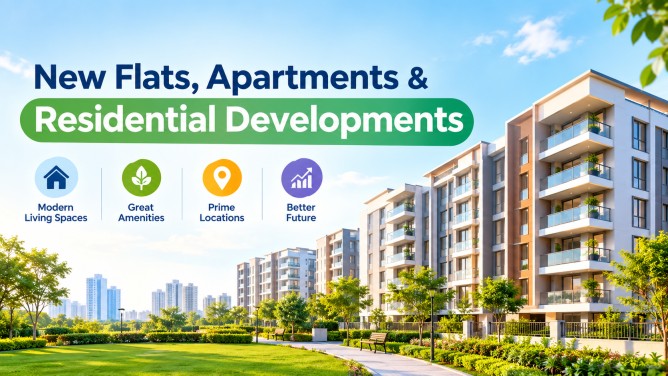
By New Flats, Apartments & Residential Developments
The demand for new flats, apartments, and residential developments continues to grow as homebuyers and investors look for modern, comfortable, and well-connected places to live. New residential properties often offer contemporary layouts, updated amenities, better energy efficiency, and access to developing neighborhoods.
Whether you are a first-time homebuyer, a growing family, a working professional, or an investor looking for a property with long-term potential, choosing the right apartment requires careful research. Location, budget, construction quality, amenities, connectivity, legal documentation, maintenance costs, and future development can all influence whether a property is the right choice.
Buying a new flat is also a significant financial commitment. Therefore, it is important to understand the different types of residential developments available and know what to look for before making a decision.
This guide explores the key factors to consider when searching for new flats, apartments, and residential properties, along with practical tips for choosing a home that suits your lifestyle and financial goals.
What Are New Residential Developments?
A residential development is a housing project that may include multiple apartments, flats, villas, or other residential units within a planned community.
New developments can range from small apartment buildings to large residential complexes featuring multiple towers, landscaped areas, parking facilities, recreational spaces, and community amenities.
Modern residential projects are often designed with contemporary lifestyles in mind. Depending on the development, residents may have access to facilities such as:
- Fitness centers
- Swimming pools
- Children’s play areas
- Clubhouses
- Landscaped gardens
- Walking paths
- Security systems
- Parking spaces
- Community halls
- Sports facilities
- Shared recreational areas
Not every project offers the same facilities, so prospective buyers should evaluate whether the amenities are genuinely useful for their needs rather than choosing a property based only on an attractive brochure.
Why Consider a New Flat or Apartment?
Buying a new property can offer several potential advantages compared with purchasing an older home.
Modern Design and Layouts
New apartments are typically designed according to current housing preferences. Open-plan living areas, modern kitchens, attached bathrooms, balconies, storage spaces, and efficient layouts may make a new flat more convenient for contemporary lifestyles.
However, modern design does not automatically mean better quality. Buyers should still examine the floor plan, usable space, ventilation, natural light, and construction specifications carefully.
Newer Infrastructure
A newly developed property may feature modern electrical systems, plumbing, elevators, security systems, parking infrastructure, and common facilities.
New construction can also reduce the immediate need for major renovations compared with some older properties.
Contemporary Amenities
Many new residential developments are designed as communities rather than standalone apartment buildings.
Facilities such as gyms, gardens, recreation areas, children’s spaces, and community halls can provide additional convenience for residents.
Potential Energy Efficiency
Modern buildings may incorporate energy-efficient lighting, appliances, ventilation systems, insulation, water-saving fixtures, or other efficiency-focused features.
Energy efficiency can potentially help reduce ongoing utility expenses, although actual savings depend on the building design, systems installed, household usage, and local utility costs.
Choosing the Right Location
Location remains one of the most important factors when buying residential property.
A well-designed apartment in an inconvenient location may not be as attractive as a simpler property in an area with excellent connectivity and essential services.
When evaluating a location, consider its proximity to:
- Workplaces and business districts
- Schools and colleges
- Hospitals and healthcare facilities
- Shopping centers
- Public transportation
- Major roads and highways
- Restaurants and entertainment
- Parks and recreational areas
- Airports or railway stations where relevant
You should also consider the neighborhood’s current condition and potential future development.
A developing area may offer opportunities for long-term growth, but buyers should avoid relying solely on promises about future infrastructure. Whenever possible, verify planned projects through reliable official sources.
Connectivity and Transportation
Good connectivity can make everyday life significantly easier.
Before purchasing a new apartment, consider how long it takes to reach important destinations during normal commuting hours rather than relying only on distance.
A property may appear close to a workplace on a map but take considerably longer to reach because of traffic congestion or limited transportation options.
Check available public transportation, major roads, metro or rail connections where applicable, and typical traffic conditions.
For households with multiple commuters, transportation access can be particularly important.
Understanding Apartment Sizes and Floor Plans
Property advertisements often describe apartments using terms such as one-bedroom, two-bedroom, or three-bedroom configurations.
However, the number of rooms does not tell the complete story.
Two apartments with the same number of bedrooms can have significantly different usable space and layouts.
Before choosing a flat, examine:
- Carpet or usable area
- Living room dimensions
- Bedroom sizes
- Kitchen layout
- Bathroom placement
- Balcony space
- Storage
- Natural light
- Ventilation
- Window placement
- Corridor space
A well-planned smaller apartment may feel more comfortable than a larger property with inefficient space utilization.
New Flats for Different Lifestyles
Different buyers have different housing requirements.
First-Time Homebuyers
First-time buyers often prioritize affordability, convenient location, and manageable monthly payments.
A smaller apartment in a well-connected neighborhood may be more practical than purchasing a larger property that creates excessive financial pressure.
Families
Families may prioritize additional bedrooms, storage, schools, healthcare facilities, parking, security, and recreational areas.
A residential development with family-oriented amenities can provide convenience for households with children.
Working Professionals
Professionals may prioritize proximity to business districts, public transportation, restaurants, fitness facilities, and other everyday services.
For them, a well-connected apartment can potentially reduce commuting time and improve work-life balance.
Property Investors
Investors typically evaluate rental demand, potential appreciation, vacancy risk, property expenses, and the overall attractiveness of the location.
An investment property should be evaluated using realistic numbers rather than assumptions about guaranteed future price growth.
Amenities: What Actually Matters?
Amenities can make a residential development attractive, but buyers should distinguish between useful facilities and marketing features.
A swimming pool may be valuable to one household but irrelevant to another.
Similarly, a large clubhouse may look impressive but have limited value if residents rarely use it.
Consider amenities based on your lifestyle.
Families may value children’s play areas and green spaces. Fitness-focused residents may appreciate gyms and sports facilities. Professionals may prioritize parking, security, and convenient access.
Also check whether amenities involve additional fees or maintenance charges.
Construction Quality Matters
A property’s appearance does not necessarily reveal the quality of its construction.
Before purchasing a new flat, research the developer’s reputation, previous projects, construction specifications, and delivery history.
Where possible, inspect the property and common areas carefully.
Important areas to consider include:
- Structural quality
- Flooring
- Doors and windows
- Plumbing
- Electrical systems
- Waterproofing
- Elevators
- Fire safety
- Common-area maintenance
- Drainage
- Parking arrangements
For under-construction properties, buyers should pay particular attention to the project’s approvals, construction progress, contractual terms, and expected completion timeline.
Check Legal Documents Before Buying
Legal due diligence is one of the most important parts of purchasing a residential property.
Buyers should verify that the developer or seller has the legal authority to sell the property and that relevant approvals and documents are in place.
Depending on the location and property type, documents may include:
- Property title documents
- Building approvals
- Development permissions
- Sale agreement
- Property tax records
- Occupancy or completion documentation where applicable
- Encumbrance-related records
- Project registration details where required
Property laws vary by country and region. It is therefore advisable to have qualified legal professionals review important documents before signing a purchase agreement.
Do not rely entirely on verbal assurances from sales representatives.
Calculate the Total Cost of Buying a Flat
The advertised property price is not always the total amount you will need to pay.
Additional expenses can include:
- Registration charges
- Taxes
- Stamp duty where applicable
- Maintenance deposits
- Parking charges
- Utility connection charges
- Home loan processing fees
- Interior work
- Moving expenses
- Insurance
- Society or association charges
Ask for a complete cost breakdown before making a financial commitment.
Understanding the total acquisition cost will help you compare properties more accurately.
Financing Your New Apartment
Many buyers use home loans to finance their property purchase.
Before choosing a loan, compare interest rates, repayment periods, processing fees, prepayment conditions, and other applicable charges.
Do not evaluate affordability solely based on whether a lender is willing to approve the loan.
Instead, consider whether the monthly payment remains comfortable alongside your other financial responsibilities.
A longer loan term may reduce monthly payments but can increase the total interest paid over the life of the loan.
Create a realistic household budget that includes the home loan payment, utilities, maintenance, insurance, taxes, transportation, and everyday expenses.
Under-Construction vs. Ready-to-Move-In Flats
One of the major decisions buyers face is whether to purchase an under-construction property or a completed apartment.
Under-Construction Properties
These may offer access to new developments and different unit choices. Depending on market conditions and the project, pricing may also differ from completed properties.
However, buyers may face construction delays, changes in project conditions, or uncertainty regarding the final delivery.
Carefully review the developer’s contractual commitments and project status before making a purchase.
Ready-to-Move-In Properties
Completed apartments allow buyers to inspect the actual unit, building, surroundings, and available facilities before purchasing.
This can make it easier to evaluate factors such as natural light, views, construction quality, noise levels, and neighborhood conditions.
The right choice depends on the buyer’s priorities, financial situation, and risk tolerance.
New Residential Developments and Future Value
Many buyers consider the potential future value of a property when making a purchase.
Several factors can influence long-term property demand, including:
- Population growth
- Employment opportunities
- Infrastructure development
- Transportation improvements
- Availability of schools and healthcare
- Commercial development
- Neighborhood quality
- Rental demand
However, future appreciation is never guaranteed.
A property should make financial sense based on its current characteristics rather than depending entirely on an uncertain future increase in value.
Common Mistakes to Avoid
Buying a new apartment can be exciting, but emotions should not replace careful evaluation.
Buying Beyond Your Budget
A larger or more luxurious apartment may look appealing, but excessive financial commitments can create long-term stress.
Choosing Based Only on Price
The cheapest property is not necessarily the best value. Location, construction quality, legal status, amenities, and long-term usability all matter.
Ignoring Maintenance Costs
A property with extensive facilities may also have higher maintenance expenses.
Understand recurring charges before purchasing.
Skipping Property Inspection
If a completed property is available for inspection, examine the actual apartment and common areas rather than relying exclusively on photographs or virtual tours.
Relying on Unverified Promises
Claims about future infrastructure, guaranteed appreciation, rental returns, or project completion should be independently verified.
How to Compare New Flats Effectively
When comparing multiple properties, create a simple checklist.
Record each property’s:
Location: How convenient is the neighborhood?
Price: What is the complete cost?
Size: How much usable space is available?
Amenities: Which facilities are actually useful?
Connectivity: How easy is it to reach work, education, healthcare, and transportation?
Construction: What is known about the developer and building quality?
Legal status: Are the necessary documents and approvals available?
Maintenance: What recurring costs should you expect?
Future potential: Is there genuine demand in the area?
Comparing properties systematically can help prevent an emotional decision.
Is Buying a New Apartment a Good Investment?
A new apartment can be a useful investment for some buyers, but its suitability depends on individual circumstances.
For an owner-occupier, the property’s primary value may be providing a comfortable home.
For an investor, rental income and potential appreciation may be more important.
The financial performance of an investment property depends on purchase price, rental income, operating expenses, financing costs, taxes, vacancy, and future market conditions.
Therefore, buyers should calculate potential returns realistically and avoid assuming that every new development will automatically appreciate.
Final Thoughts
New flats, apartments, and residential developments can offer modern living spaces, contemporary amenities, improved infrastructure, and convenient community environments. They can be attractive to first-time buyers, families, professionals, and property investors.
However, the best property is not necessarily the newest or most expensive one. A successful purchase depends on choosing a property that fits your budget, lifestyle, location preferences, and long-term financial objectives.
Before buying, research the neighborhood, compare floor plans, examine construction quality, understand the total cost, verify legal documentation, and evaluate financing carefully. If you are purchasing an under-construction property, pay particular attention to project approvals, construction progress, contractual terms, and delivery commitments.
Remember that real estate is a significant financial commitment, and property values are not guaranteed to increase. Taking time to conduct proper research and obtain professional advice where necessary can help you make a more informed decision.
Whether you are searching for a compact city apartment, a spacious family flat, or a home within a large residential development, careful planning can help you find a property that works for your needs today while remaining suitable for your long-term plans.