
 By
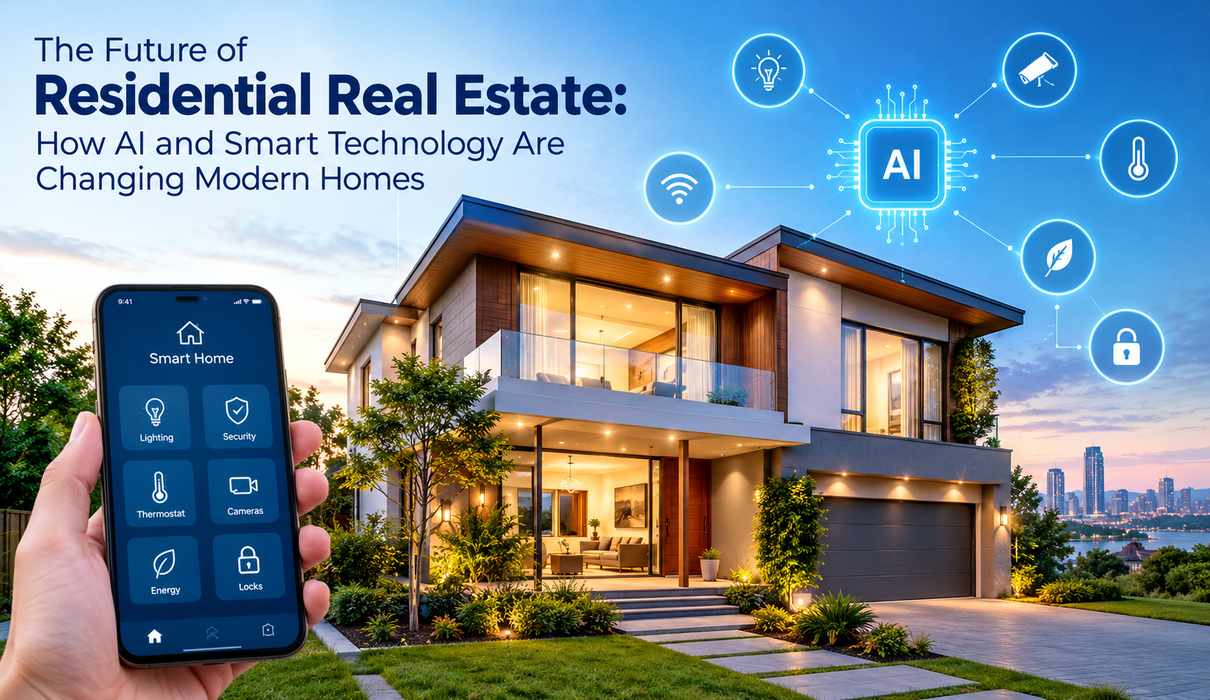
By The Future of Residential Real Estate: How AI and Smart Technology Are Changing Modern Homes
The residential real estate industry is entering a new era shaped by technology, changing lifestyles and growing demand for convenience. For decades, buying, selling and managing a home followed relatively traditional processes. Today, artificial intelligence (AI), smart home devices, automation, virtual property tours and connected technologies are transforming how people search for properties, manage their homes and think about modern living.
Technology is no longer limited to entertainment or communication. It is becoming part of the home itself.
From intelligent thermostats and smart security systems to AI-powered property recommendations and automated energy management, modern residential properties are becoming increasingly connected. At the same time, real estate professionals are using technology to improve property marketing, valuation, customer service and property management.
The future of residential real estate will likely be defined by homes that are more connected, efficient, personalized and responsive to the needs of their occupants.
1. AI Is Transforming the Homebuying Journey
Searching for a new home can be a time-consuming process. Buyers traditionally have to browse property listings, compare locations, check prices, review photographs and arrange property visits.
Artificial intelligence is making this process more personalized.
AI-powered real estate platforms can analyze property information and match potential buyers with homes based on factors such as budget, location, property size, amenities and lifestyle preferences.
Instead of searching through hundreds of listings manually, buyers may increasingly describe the type of home they want in natural language.
For example, a buyer could request a three-bedroom home near public transportation, with a home office, outdoor space and smart-home features.
AI can then help organize relevant options.
This does not eliminate the importance of real estate professionals. Instead, it can reduce repetitive searching and allow buyers and agents to focus more on properties that match their requirements.
2. Smart Homes Are Becoming a Major Residential Property Trend
The smart home is one of the most visible examples of technology changing residential properties.
Smart home technology connects devices and systems so they can be monitored or controlled digitally. Depending on the property, homeowners may control lighting, temperature, security, appliances and entertainment systems through smartphones or voice assistants.
Common smart home features include:
- Smart lighting
- Connected thermostats
- Smart door locks
- Video doorbells
- Security cameras
- Automated blinds
- Smart appliances
- Water-monitoring systems
- Energy-monitoring devices
- Voice-controlled home systems
These technologies can make everyday tasks more convenient.
For example, homeowners can adjust the temperature before arriving home, check a security camera remotely or turn off connected appliances through a mobile application.
As smart-home technology becomes more accessible, connected features are likely to become increasingly common in new residential developments.
3. AI Is Making Homes More Personalized
A major difference between traditional automation and AI-powered homes is personalization.
Basic automation follows predetermined instructions. AI systems can potentially learn patterns and adapt to household behavior.
For example, a smart home could recognize typical temperature preferences, lighting schedules or energy-use patterns and adjust settings accordingly.
A household might have different preferences throughout the day. Lighting could automatically change in the evening, heating or cooling could adjust based on occupancy, and security systems could respond differently depending on whether residents are home.
This creates a more responsive living environment.
The future of residential technology may therefore move from homes that simply respond to commands to homes that anticipate routine needs while still allowing residents to maintain control.
4. Smart Technology Can Improve Home Security
Security remains one of the most important considerations for homeowners.
Modern residential properties can use connected security systems that provide real-time monitoring and remote access.
Smart cameras, motion sensors, doorbell cameras and digital locks can allow residents to monitor their properties from almost anywhere.
Some systems can also send notifications when unusual activity is detected.
For example, a homeowner might receive an alert when motion is detected near a door or when someone rings a smart doorbell.
AI-powered computer vision can also help distinguish between different types of movement in compatible systems.
However, connected security creates its own responsibilities. Homeowners should use strong passwords, keep devices updated and understand how their data is stored and shared.
5. Energy Efficiency Is Becoming More Important
Energy efficiency is another major trend influencing residential properties.
Homeowners increasingly want to control energy costs while reducing unnecessary consumption. Smart technology can help monitor and manage energy use.
Smart thermostats can adjust heating and cooling based on schedules or occupancy. Smart lighting systems can automatically turn lights off when rooms are not being used. Energy-monitoring devices can provide information about electricity consumption.
Some modern homes may also combine smart technology with solar power, battery storage and energy-efficient appliances.
The result can be a more connected approach to household energy management.
For property developers, energy-efficient features can also become an important part of designing homes that appeal to buyers looking for long-term efficiency and modern amenities.
6. Virtual Tours Are Changing Property Searches
Technology has also changed how buyers view residential properties.
Traditional property searches often require buyers to physically visit multiple homes. Virtual tours can reduce the need for some initial visits by allowing potential buyers to explore properties remotely.
Three-dimensional tours, 360-degree photography and video walkthroughs can provide a more detailed understanding of a property before an in-person viewing.
This can be particularly useful for:
- Buyers moving to another city
- International property buyers
- Busy professionals
- Investors
- Buyers comparing multiple properties
Virtual tours do not completely replace physical inspections. Buyers still need to evaluate the actual condition, construction quality, neighborhood and other important factors.
However, digital viewing tools can make the early stages of property research faster and more convenient.
7. AI Is Changing Property Valuation
Determining the potential value of a residential property can involve numerous factors.
Location, property size, condition, amenities, comparable properties and market conditions can all influence valuation.
AI and data analytics can help real estate professionals process large datasets and identify patterns.
Technology can compare information about similar properties and provide analytical insights that may support valuation and market research.
However, an algorithmic estimate should not automatically be considered the definitive market value of a property. Physical inspections, local market expertise and other factors remain important.
The most useful approach is to combine technology-based analysis with professional evaluation.
8. Smart Buildings Are Shaping Modern Residential Communities
Smart technology is not limited to individual homes. Entire residential developments can become connected environments.
Smart apartment buildings and residential communities may use technology for:
- Access control
- Parking management
- Energy monitoring
- Building maintenance
- Package delivery
- Security
- Visitor management
- Community communication
For example, residents could use a mobile application to access common areas, reserve shared facilities or receive building notifications.
Property managers can also use connected systems to identify maintenance issues before they become major problems.
This can improve operational efficiency while creating a more convenient experience for residents.
9. Predictive Maintenance Could Change Property Management
Traditional property maintenance is often reactive. A problem occurs, and then a technician is called.
Connected devices can potentially change this approach.
Sensors can monitor certain building systems and identify unusual patterns. AI-powered analytics can then help property managers determine whether equipment may require inspection.
For example, unusual changes in energy consumption or equipment performance could indicate a potential maintenance issue.
Predictive maintenance can help property owners identify problems earlier and potentially reduce unexpected repair costs.
The technology is particularly relevant for large apartment buildings and residential communities where managing multiple systems can be complex.
10. Technology Is Supporting Sustainable Residential Development
Sustainability is increasingly influencing the design and operation of residential properties.
Smart technology can contribute by helping homeowners and property managers understand resource consumption.
Connected systems can monitor electricity, water and heating or cooling use. This information can encourage more efficient behavior and help identify unnecessary consumption.
Modern residential developments may also incorporate:
- Solar energy
- Energy-efficient windows
- Better insulation
- Smart lighting
- Efficient appliances
- Water-saving systems
- EV charging infrastructure
- Sustainable building materials
Technology alone does not make a property sustainable. Building design, construction materials, energy sources and long-term management all matter.
However, smart systems can provide useful tools for managing resources more efficiently.
11. The Rise of Flexible and Multi-Purpose Homes
The way people use their homes is changing.
Remote and hybrid work have increased the importance of flexible living spaces for many households. A room may need to function as an office during the day and a guest room or living space at another time.
Modern residential design is increasingly focused on adaptable spaces.
Technology can support this flexibility through smart lighting, adjustable climate controls, wireless connectivity and integrated entertainment systems.
Future homes may therefore be designed around multiple functions rather than rigid room purposes.
A well-designed home office, for example, can become an important feature for buyers who work remotely or operate businesses from home.
12. AI Can Improve the Experience for Real Estate Professionals
Technology is not only benefiting buyers and homeowners.
Real estate agents and property managers can use AI to automate repetitive tasks and organize information more efficiently.
Potential applications include:
- Property listing creation
- Customer communication
- Lead management
- Market research
- Property recommendations
- Appointment scheduling
- Document organization
- Marketing content
- Customer follow-ups
By automating routine activities, professionals can spend more time on negotiations, property visits and client relationships.
Human expertise remains particularly important in real estate because property transactions involve financial decisions, legal documentation and personal preferences.
13. Challenges of Smart Residential Technology
Despite its advantages, smart-home technology comes with several challenges.
Privacy
Connected devices can collect information about household activity. Homeowners should understand what information devices collect and how it is stored.
Cybersecurity
Internet-connected devices can create security risks if they are poorly configured or not updated.
Cost
Installing advanced smart-home systems can increase upfront costs, particularly in older properties that require upgrades.
Compatibility
Different manufacturers may use different platforms. Buyers should consider whether their devices can work together.
Technology Dependence
A highly automated home can become inconvenient if systems fail or internet connectivity is unavailable.
These challenges make careful technology selection important.
14. What Homebuyers Will Look For in the Future
As technology becomes more integrated into everyday life, homebuyers may increasingly evaluate properties based on both traditional and digital features.
In addition to location, size and price, buyers may consider:
- Smart security
- Energy efficiency
- Internet connectivity
- Home automation
- EV charging
- Solar systems
- Flexible workspaces
- Smart appliances
- Building technology
- Digital access systems
The definition of a modern home is therefore expanding.
A home is no longer simply a physical structure. Increasingly, it is an ecosystem of technology, services and connected systems.
15. The Future of Residential Real Estate
The next stage of residential real estate is likely to combine physical property with digital intelligence.
Imagine searching for a property through an AI assistant that understands your budget and lifestyle, touring shortlisted homes virtually, comparing energy performance and evaluating smart-home features before visiting the most relevant properties in person.
Once you move in, connected systems could manage lighting, security, energy and maintenance.
For property managers, AI could analyze building performance and identify maintenance requirements.
For developers, data could provide insights into what future buyers want from residential communities.
This represents a broader shift from traditional real estate toward technology-enabled residential living.
Conclusion: A Smarter Future for Modern Homes
The future of residential real estate is being shaped by the rapid development of AI, smart home technology, automation, data analytics and connected devices.
AI is making property searches more personalized, while virtual tours are making home discovery more convenient. Smart security systems are improving monitoring, connected energy systems can support efficiency, and predictive maintenance may help property managers identify problems earlier.
At the same time, homeowners are gaining greater control over their living environments.
However, technology should enhance the home rather than complicate it. Privacy, cybersecurity, affordability, reliability and ease of use will remain important considerations as smart technology becomes more widespread.
The residential properties of the future will likely be more connected, energy-conscious, flexible and personalized. For homebuyers, property owners, developers and real estate professionals, understanding these changes can help them adapt to a rapidly evolving housing market.
Ultimately, the future of residential real estate is not simply about adding more technology to homes. It is about using technology intelligently to create more comfortable, efficient, secure and personalized places to live.