
 By
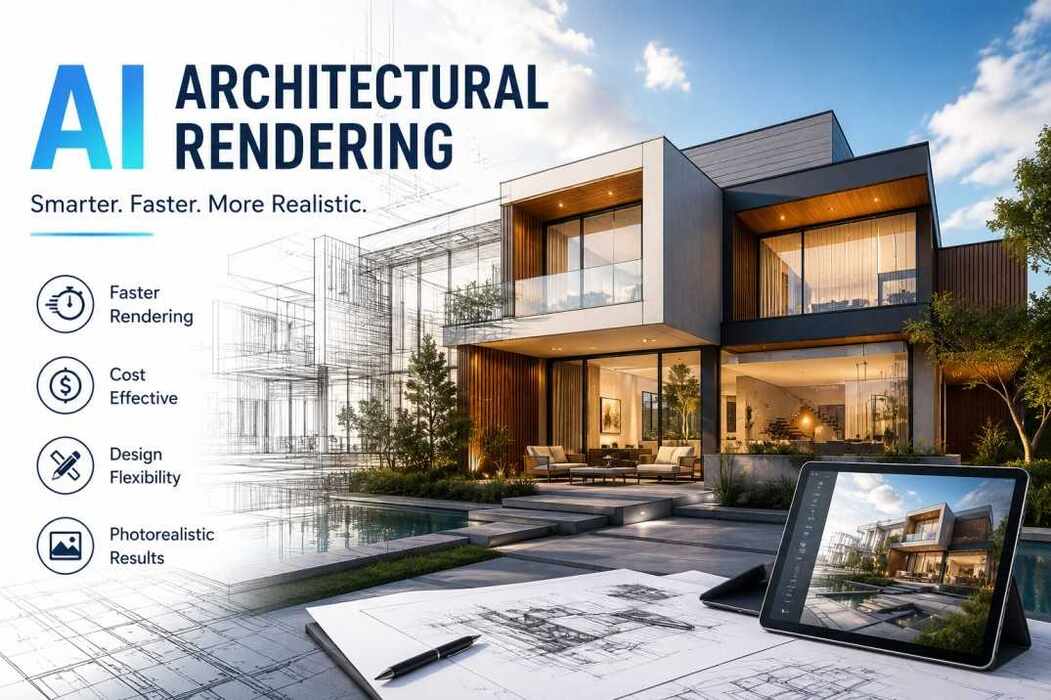
By Architectural visualization has changed significantly over the past few years. Traditional rendering methods often require hours or even days to create high-quality images. Today, AI architectural rendering is making this process much faster, allowing architects, designers, and real estate professionals to generate realistic visuals within minutes.
Artificial intelligence is not replacing architects—it is helping them work more efficiently. From turning simple sketches into photorealistic images to experimenting with different materials, lighting, and styles, AI allows professionals to explore more creative ideas without spending countless hours on manual rendering.
Whether you’re designing a residential home, commercial building, or urban development project, AI architectural rendering offers a faster and more flexible way to visualize concepts before construction begins.
What Is AI Architectural Rendering?
AI architectural rendering is the process of using artificial intelligence to generate realistic images of architectural designs. Instead of manually adjusting every texture, shadow, material, and lighting effect, AI analyzes the design and automatically creates high-quality renderings based on user prompts, sketches, CAD files, or 3D models.
Modern AI rendering platforms can produce:
- Exterior building visualizations
- Interior room renderings
- Concept architecture
- Landscape designs
- Urban planning visuals
- Residential and commercial building images
These renderings help architects communicate ideas clearly to clients while reducing production time.
How AI Architectural Rendering Works
AI rendering combines machine learning with image generation technology to understand architectural elements and create realistic visuals.
The typical workflow includes:
1. Upload a Design
Users upload a sketch, floor plan, CAD drawing, BIM model, or 3D model.
2. Select a Style
Choose from styles such as:
- Modern
- Contemporary
- Scandinavian
- Industrial
- Luxury
- Minimalist
- Traditional
3. Customize Materials
Users can specify:
- Wood finishes
- Concrete
- Glass
- Stone
- Metal
- Brick
- Landscaping
4. Generate Render
The AI processes the information and creates realistic architectural images in just a few minutes.
5. Refine and Improve
Designers can modify prompts, adjust materials, change weather conditions, or experiment with different lighting until they achieve the desired result.
Benefits of AI Architectural Rendering
1. Faster Project Delivery
Traditional rendering often takes several hours or days. AI can generate multiple design options in minutes, helping architects meet tight project deadlines.
2. Cost Savings
Hiring visualization specialists or spending hours on rendering software can increase project costs. AI reduces manual work while maintaining impressive visual quality.
3. Improved Client Presentations
Clients often struggle to understand technical drawings. AI architectural rendering converts concepts into realistic images that are easy to understand.
Clear visual presentations help clients make decisions faster.
4. Better Design Exploration
Architects can test multiple concepts without rebuilding the entire scene.
For example, they can quickly compare:
- Different façade materials
- Roof styles
- Window placements
- Landscape ideas
- Interior finishes
This flexibility encourages better design decisions.
5. Increased Productivity
Instead of spending time on repetitive rendering tasks, architects can focus more on creativity, planning, and client collaboration.
Applications of AI Architectural Rendering
AI architectural rendering is now used across multiple industries.
Residential Architecture
Home builders use AI to present realistic house designs before construction starts.
Commercial Buildings
Architects visualize office buildings, shopping centers, hotels, and retail projects more efficiently.
Interior Design
Designers create multiple room concepts with different furniture, lighting, colors, and materials.
Real Estate Marketing
Developers use AI-generated renderings to promote properties before they are built.
High-quality visuals improve online listings, brochures, and marketing campaigns.
Urban Planning
City planners create realistic visualizations of roads, parks, public spaces, and large infrastructure projects.
AI Architectural Rendering vs Traditional Rendering
| AI Architectural Rendering | Traditional Rendering |
|---|---|
| Generates images in minutes | Often requires hours or days |
| Lower production costs | Higher labor costs |
| Easy design revisions | Manual editing required |
| Multiple design variations | Limited iterations |
| Beginner-friendly workflow | Requires advanced software skills |
Traditional rendering still provides maximum control for highly complex visualization projects, but AI offers exceptional speed and efficiency for most architectural workflows.
Features to Look for in an AI Architectural Rendering Tool
Choosing the right AI rendering platform can make a significant difference in your workflow.
Look for features such as:
- Sketch-to-render capability
- Text prompt generation
- Interior and exterior rendering
- Material customization
- High-resolution image export
- Multiple architectural styles
- Lighting adjustments
- Landscape generation
- Fast rendering speed
- User-friendly interface
These features help architects produce professional results with less effort.
Why AI Architectural Rendering Is Becoming Popular
Several factors are driving the adoption of AI in architecture.
Growing Demand for Faster Projects
Clients expect quick design revisions and faster approvals.
Improved AI Technology
Recent advances in generative AI have significantly improved image quality, realism, and architectural accuracy.
Affordable Solutions
Many AI rendering tools are available at a lower cost than traditional visualization software, making them accessible to freelancers, small studios, and large firms alike.
Better Collaboration
AI-generated visuals make communication easier between architects, engineers, developers, and clients.
Common Challenges
Although AI architectural rendering offers many advantages, there are still some limitations.
Design Accuracy
Complex structural details may still require manual refinement.
Human Creativity
AI generates images based on patterns, but architects provide the creativity, technical expertise, and problem-solving needed for successful projects.
Project-Specific Requirements
Every project has unique building regulations, engineering standards, and client expectations that AI cannot fully understand without human guidance.
For this reason, AI works best as a design assistant rather than a replacement for professional architects.
Best Practices for AI Architectural Rendering
To get the best results:
- Start with a clean sketch or 3D model.
- Use clear and detailed prompts.
- Specify architectural style and materials.
- Generate multiple versions before making decisions.
- Refine lighting and textures for realistic output.
- Review renderings carefully before presenting them to clients.
These simple practices can significantly improve rendering quality.
The Future of AI Architectural Rendering
Artificial intelligence continues to evolve rapidly.
Future AI rendering tools are expected to include:
- Real-time rendering
- Interactive 3D environments
- AI-powered virtual walkthroughs
- Automatic material optimization
- BIM integration
- Voice-controlled design editing
- Virtual reality visualization
- Automated landscape generation
As these technologies mature, architectural visualization will become even faster, more accurate, and more interactive.
Conclusion
AI architectural rendering is changing the way architects, designers, and real estate professionals create visualizations. By reducing rendering time, lowering production costs, and making design exploration easier, AI helps professionals deliver better results without sacrificing creativity.
From residential homes to commercial developments, AI enables teams to generate realistic architectural images quickly while improving communication with clients. Although traditional rendering remains valuable for highly detailed projects, AI has become an essential tool for modern architectural workflows.
As artificial intelligence continues to improve, AI architectural rendering will play an even greater role in architectural design, project presentations, and property marketing. Firms that adopt AI today can streamline their workflows, explore more design possibilities, and stay competitive in an increasingly digital architecture industry.