
 By
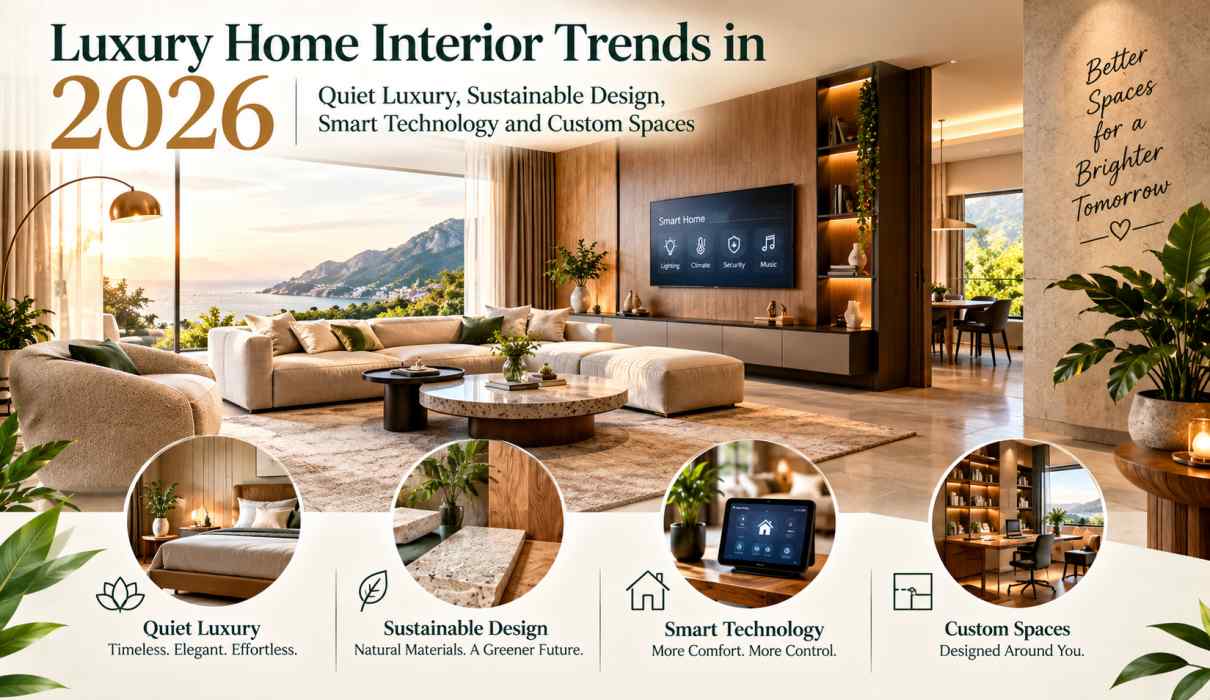
By Luxury Home Interior Trends in 2026: Quiet Luxury, Sustainable Design, Smart Technology and Custom Spaces
Luxury home interiors are changing in 2026. Instead of focusing only on expensive furniture, oversized decorations, or highly polished finishes, homeowners are looking for spaces that feel personal, comfortable, intelligent, sustainable, and timeless. The definition of luxury is moving from simply displaying wealth to creating an environment that improves everyday living.
The latest luxury home interior trends in 2026 combine quiet luxury, natural materials, smart-home technology, custom furniture, wellness-focused spaces, and sustainable design. Warm woods, natural stone, textured fabrics, handcrafted details, soft lighting, and carefully selected statement pieces are replacing overly coordinated showroom-style interiors.
At the same time, technology is becoming more integrated into the home. Smart lighting, automated curtains, intelligent security, connected appliances, and personalized climate control can improve convenience without dominating the visual design. Current 2026 interior-design forecasts also point toward more expressive, personalized spaces, artisan details, wellness amenities, and discreet technology.
Whether you are designing a luxury apartment, villa, penthouse, or modern family home, understanding these trends can help you create an interior that feels sophisticated today while remaining relevant for years to come.
What Is Luxury Interior Design in 2026?
Luxury interior design in 2026 is increasingly about quality, comfort, craftsmanship, personalization, and functionality.
A luxury home does not necessarily need to be filled with expensive objects. Instead, every major element should have a purpose. A beautifully made sofa, custom storage system, natural stone surface, handcrafted light fixture, or carefully designed reading corner can contribute more to a sophisticated interior than dozens of decorative accessories.
The result is a more relaxed form of luxury where elegance is experienced rather than simply displayed.
This approach is particularly relevant as homeowners move away from overly staged interiors and seek spaces that feel authentic and connected to their lifestyles.
1. Quiet Luxury Is Becoming More Personal
Quiet luxury remains an important influence in 2026, but it is evolving beyond beige walls and minimalist furniture.
Modern quiet luxury focuses on:
- High-quality materials
- Comfortable furniture
- Subtle detailing
- Timeless design
- Natural textures
- Custom craftsmanship
- Soft and layered lighting
- Carefully selected artwork
Instead of matching every item, homeowners are combining different textures and materials to create visual depth.
For example, a living room might combine a warm walnut cabinet, natural stone coffee table, linen sofa, wool rug, aged-metal lighting, and handmade ceramics. Each item can be relatively understated, but together they create a sophisticated atmosphere.
The goal is to create a home that feels expensive because of its quality and design intelligence, rather than because it contains obvious luxury symbols.
2. Natural Materials Take Centre Stage
Natural materials are one of the strongest luxury interior design trends for 2026.
Homeowners and designers are increasingly using materials such as:
- Natural stone
- Marble
- Travertine
- Limestone
- Walnut and oak
- Bamboo
- Cane
- Jute
- Linen
- Wool
- Terracotta
- Clay
- Reclaimed wood
These materials bring texture and warmth into contemporary spaces.
Natural imperfections are also becoming more desirable. Instead of selecting surfaces that look completely uniform, designers are embracing the variations found in stone, wood, handmade tiles, plaster, and textiles.
Current Indian interior-design forecasts specifically highlight FSC-certified wood, clay-based paints, bamboo, hemp textiles, recycled terrazzo, low-VOC finishes, jute, cane, and other natural materials as part of the sustainability movement.
3. Sustainable Luxury Is the New Premium
Sustainability is no longer separate from luxury design. In 2026, environmentally responsible choices can actually enhance the feeling of quality.
A sustainable luxury home can include responsibly sourced wood, recycled materials, durable furniture, energy-efficient lighting, low-VOC paints, locally made products, and long-lasting finishes.
The principle is simple: buy better, use longer, waste less.
Instead of replacing furniture every few years, homeowners can invest in timeless pieces that can be repaired, refinished, or passed between generations.
Energy efficiency is also becoming an important part of sustainable luxury. LED lighting, smart energy management, efficient appliances, natural ventilation, insulation, and climate-responsive planning can reduce energy consumption while improving comfort.
4. Smart Home Technology Becomes More Discreet
Smart technology is transforming luxury homes, but the most sophisticated approach is often the least visible.
In 2026, technology can be integrated into the architecture instead of becoming the main visual attraction.
Popular smart-home features include:
- Automated lighting
- Smart curtains and blinds
- Intelligent climate control
- Voice-controlled appliances
- Smart security systems
- Automated entertainment
- Hidden charging stations
- Smart kitchen appliances
- Energy monitoring
- Sensor-based lighting
Smart technology can also improve security. Modern systems can combine cameras, motion sensors, access controls, and AI-assisted detection while maintaining a clean aesthetic. Architectural Digest’s 2026 forecast highlights increasingly sophisticated residential security systems, including AI-powered recognition and integrated smart-home systems.
The best luxury interiors hide technology when it is not needed and make it effortless to use when it is.
5. Custom Spaces Replace Generic Rooms
Personalization is becoming one of the defining features of luxury interiors.
Instead of designing every home around the same living room, dining room, bedroom, and kitchen formula, homeowners are creating rooms based on their individual routines and interests.
Examples include:
- Private libraries
- Home offices
- Meditation rooms
- Music rooms
- Home theatres
- Wine storage areas
- Creative studios
- Fitness rooms
- Dressing rooms
- Personal lounges
- Spa-style bathrooms
A homeowner who loves reading may prefer a custom library with integrated lighting and shelving. Someone who works from home may invest in a sound-controlled office with ergonomic furniture and concealed technology.
This is luxury with a purpose: designing the home around the person who lives there.
6. Wellness Becomes Part of Luxury Living
Wellness is increasingly being built directly into residential interiors.
The modern luxury home is becoming a place not only to entertain guests but also to relax, recover, exercise, sleep, and disconnect from daily stress.
Wellness-oriented interiors can include:
- Spa-inspired bathrooms
- Home gyms
- Meditation corners
- Sauna rooms
- Steam showers
- Relaxation lounges
- Natural-light reading areas
- Acoustic treatments
- Indoor greenery
- Air-quality systems
High-end bathrooms are particularly suited to this trend. Architectural Digest’s 2026 forecast highlights the growing interest in residential bathhouses, hydrotherapy areas, saunas, cold plunges, steam rooms, and nature-inspired materials.
Even without a large budget, homeowners can create a wellness atmosphere through soft lighting, natural materials, comfortable textiles, plants, calming colors, and clutter-free layouts.
7. Warm Colours Replace Cold Minimalism
The all-white and cool-grey interior is losing some of its dominance.
In 2026, luxury interiors are becoming warmer and more expressive. Popular palettes include:
- Warm beige
- Terracotta
- Olive green
- Sage
- Mustard
- Deep brown
- Teak
- Muted ochre
- Indigo
- Cream
- Warm white
These colors work particularly well with natural wood and stone.
Warm minimalism creates an environment that feels clean without feeling sterile. This makes it suitable for bedrooms, living rooms, dining spaces, and luxury apartments.
Current 2026 design coverage also notes the shift from stark white and all-grey interiors toward warmer neutrals, earthy colors, natural woods, and textured materials.
8. Layered Lighting Creates a Premium Atmosphere
Lighting is one of the easiest ways to make an interior feel more luxurious.
Rather than relying on one central ceiling light, modern luxury homes use multiple layers:
Ambient lighting provides general illumination.
Task lighting supports activities such as reading, cooking, working, or dressing.
Accent lighting highlights artwork, architecture, shelves, plants, or decorative objects.
Mood lighting creates a relaxed atmosphere in the evening.
Smart lighting can take this concept further by allowing homeowners to change brightness, color temperature, and lighting scenes throughout the day.
For example, a home could use brighter neutral light during working hours and softer warm lighting during dinner or relaxation.
9. Curved Furniture and Architectural Details
Straight lines are no longer the only language of modern interiors.
Curved sofas, rounded coffee tables, arched doorways, curved kitchen islands, rounded shelves, and sculptural lighting are gaining attention.
Curves can make large rooms feel softer and more welcoming. They also create a sense of movement and visual interest.
The trend does not require every element to be rounded. A sophisticated interior can combine curved furniture with straight architectural lines to create contrast.
Current 2026 interior-design coverage identifies curves and arches as an important continuing trend, particularly when combined with materials such as microcement, lime plaster, and engineered stone.
10. Bespoke Furniture and Artisan Craftsmanship
Mass-produced furniture is convenient, but custom pieces can give a luxury interior a stronger identity.
Bespoke furniture allows homeowners to control:
- Dimensions
- Materials
- Colors
- Storage
- Finishes
- Hardware
- Functionality
Handcrafted objects can add another layer of individuality.
Artisan ceramics, handwoven rugs, handcrafted woodwork, custom tiles, traditional textiles, and locally produced artwork can make a home feel more connected to its culture and surroundings.
This is especially valuable in luxury interiors because the goal is increasingly to create spaces that cannot simply be copied from a catalogue.
11. Multifunctional Luxury Spaces
Luxury does not always mean having more rooms. In 2026, it can also mean making existing spaces work harder.
A large study might transform into a guest room. A living room could include a hidden work area. A kitchen island can provide cooking, dining, storage, and social space.
Sliding partitions, concealed storage, modular furniture, foldaway desks, and flexible lighting can make rooms adaptable.
Multifunctional interiors are particularly useful in urban homes where space is limited. Current Indian design forecasts identify flexible rooms, modular dividers, sliding panels, and multi-purpose furniture as important trends.
12. Nature-Inspired Interiors Go Beyond Houseplants
Biophilic design continues to influence luxury interiors, but it is becoming more sophisticated.
Instead of simply placing plants around a room, designers are bringing nature in through:
- Natural stone
- Wood
- Earthy colors
- Landscape-inspired artwork
- Organic shapes
- Natural fabrics
- Indoor gardens
- Large windows
- Outdoor-indoor connections
The objective is to create an environment that feels connected to nature.
For apartments, this could mean a balcony garden, natural wood furniture, stone textures, indoor plants, and large mirrors that increase the perception of natural light.
13. Smart Kitchens Become More Sophisticated
The kitchen is becoming one of the most technology-rich areas of the luxury home.
Modern smart kitchens can include connected appliances, touchless faucets, intelligent ovens, energy-efficient appliances, automated lighting, sensor-controlled drawers, and advanced storage systems.
The focus is not technology for its own sake. Instead, smart features should make cooking, cleaning, organization, and entertaining easier.
A well-designed luxury kitchen combines technology with beautiful materials, ergonomic planning, concealed storage, and durable surfaces.
14. The Rise of Digital Craft and AI-Assisted Design
Artificial intelligence is also influencing the creative side of interior design.
AI-powered tools can help homeowners and designers experiment with:
- Room layouts
- Color combinations
- Furniture arrangements
- Material combinations
- Lighting concepts
- Decorative styles
- Custom patterns
The emerging idea of “digital craft” combines AI-generated concepts with handmade materials and artisan production. This creates possibilities for customized wallpapers, rugs, textiles, lighting, furniture, and decorative elements.
However, AI should be considered a design assistant rather than a replacement for professional judgment. Real-world factors such as measurements, structural limitations, material performance, climate, maintenance, and budget still require careful planning.
How to Create a Luxury Interior Without Overdesigning
Luxury design does not require filling every corner with expensive products.
A better approach is to focus on a few high-impact decisions:
- Choose a timeless base palette.
- Invest in quality furniture.
- Use natural materials where practical.
- Add layered lighting.
- Incorporate custom storage.
- Select meaningful artwork.
- Hide unnecessary technology.
- Include comfortable textiles.
- Add greenery or nature-inspired elements.
- Leave enough negative space.
The most successful luxury interiors usually have balance. There should be enough decoration to create personality but enough open space to let important elements stand out.
Luxury Interior Design Trends to Watch in 2026
Looking ahead, several themes are likely to remain influential throughout the year:
- Quiet luxury with stronger personalization
- Sustainable and locally sourced materials
- Smart-home automation
- Wellness-focused rooms
- Natural stone and warm woods
- Artisan craftsmanship
- Warm minimalism
- Curved architecture and furniture
- Multifunctional spaces
- AI-assisted design
- Nature-inspired interiors
- Integrated home security
- Custom lighting
- Acoustic comfort
These trends share one important principle: the home should work for the people who live in it.
Conclusion
Luxury home interior trends in 2026 are moving beyond traditional ideas of glamour. Today’s luxury is increasingly defined by comfort, craftsmanship, technology, sustainability, wellness, and personal expression.
Quiet luxury creates timeless elegance through quality and restraint. Sustainable design makes environmental responsibility part of premium living. Smart technology improves convenience while remaining discreet. Custom spaces allow homeowners to design around their interests, routines, and lifestyles.
Natural materials, warm colors, layered lighting, artisan details, curved forms, wellness areas, and multifunctional rooms further strengthen this new approach to luxury interiors.
The biggest lesson for homeowners is simple: do not design a luxury home merely to impress visitors. Design it to improve everyday life.
A truly successful luxury interior should look beautiful, feel comfortable, function intelligently, age gracefully, and reflect the personality of the people who call it home. In 2026, that combination of beauty, technology, sustainability, and individuality is what makes a home genuinely luxurious.