
 By
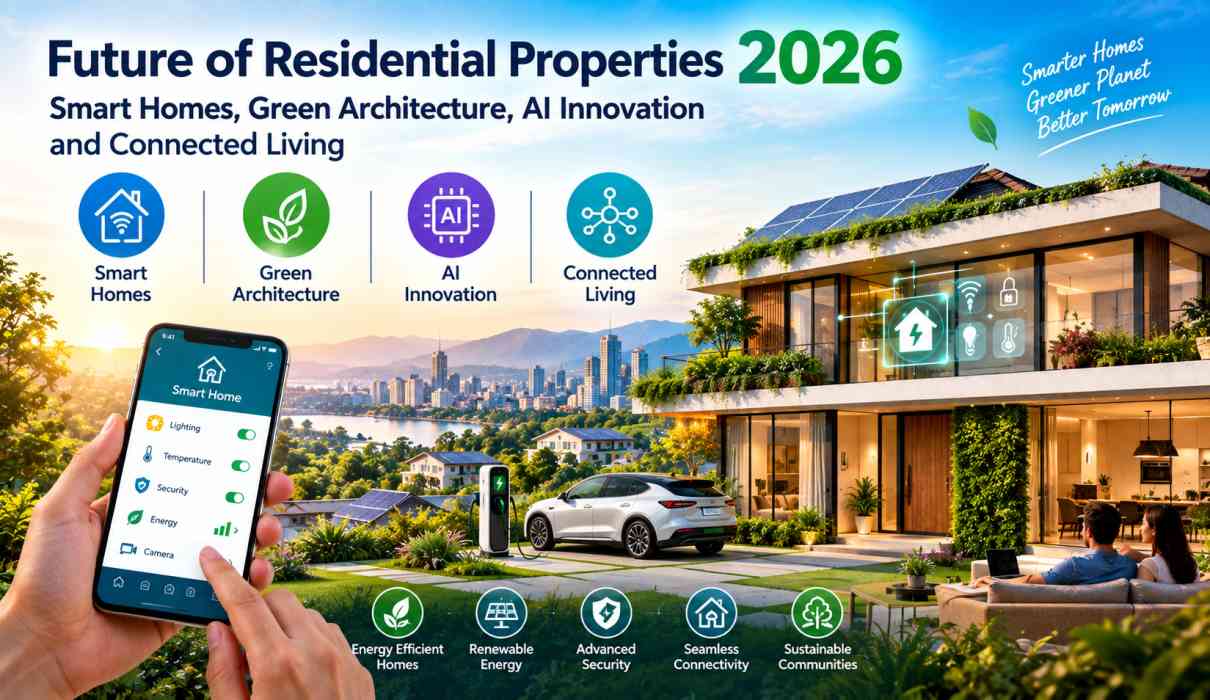
By Future of Residential Properties 2026: Smart Homes, Green Architecture, AI Innovation and Connected Living
The residential property sector is entering a new phase in 2026 as technology, sustainability, changing lifestyles and evolving buyer expectations reshape modern housing. Homes are no longer viewed only as places to live. Increasingly, they are becoming connected environments that combine comfort, energy efficiency, security, automation, wellness and digital convenience.
The future of residential properties in 2026 is being influenced by smart-home technology, green architecture, artificial intelligence, energy-efficient systems, connected devices and community-focused development. Property developers and homeowners are looking for solutions that can make homes more comfortable while also improving resource efficiency and long-term value.
From AI-powered home automation to solar energy, smart security and sustainable building materials, the modern residential property is becoming more intelligent and environmentally conscious. At the same time, buyers are increasingly interested in flexible spaces that can support working, relaxing, exercising and socialising within the same home.
This article explores the major residential property trends in 2026, including smart homes, green architecture, AI innovation, connected living and the technologies shaping the future of housing.
The Changing Residential Property Landscape in 2026
Residential real estate is changing alongside broader developments in technology and society. Digital services have transformed how people search for properties, compare prices, communicate with agents and complete transactions.
Inside the home, connected devices are changing everyday routines. Smart lighting, thermostats, security cameras, door locks, appliances and energy-monitoring systems can communicate through connected platforms.
At the same time, sustainability has become an important consideration in residential construction. Developers are exploring energy-efficient designs, renewable energy, better insulation, water-saving systems and environmentally conscious materials.
Major residential property trends 2026 include:
- Smart-home automation
- AI-powered residential technology
- Energy-efficient construction
- Green architecture
- Renewable energy systems
- Smart security
- Connected appliances
- Flexible home-office spaces
- Wellness-focused design
- Sustainable residential communities
- Digital property management
These trends are influencing both new developments and the renovation of existing homes.
Smart Homes Become More Advanced
Smart homes are one of the defining features of modern residential properties.
A smart home uses connected devices and digital systems to automate or monitor different aspects of the property. Residents can control lighting, temperature, security and appliances through smartphones, voice assistants or automated routines.
In 2026, smart-home systems are becoming increasingly integrated rather than functioning as separate devices.
A homeowner could potentially create automated routines that adjust lighting, temperature and security according to time, occupancy or personal preferences.
Smart-home features may include:
- Automated lighting
- Smart thermostats
- Connected appliances
- Digital door locks
- Smart cameras
- Motion sensors
- Automated curtains
- Energy monitoring
- Water-leak detection
- Voice-controlled systems
The goal is not simply to add technology but to make everyday living more convenient and efficient.
AI Innovation in Residential Properties
Artificial intelligence is becoming an important component of the future of residential properties.
AI can analyse data from connected devices and help residential systems respond to household patterns. For example, an intelligent system could learn when residents typically use particular rooms and adjust certain settings accordingly.
AI can also support predictive maintenance. Data from heating, cooling, electrical or plumbing systems may help identify unusual patterns that could indicate a potential problem.
In property management, AI can assist with maintenance scheduling, customer communication, energy analysis and building operations.
AI may also influence the property-buying process. Digital platforms can analyse preferences such as location, budget, property size and lifestyle requirements to help users discover potentially suitable homes.
However, AI should complement rather than replace professional property advice. Buyers still need to independently verify property information, legal documentation, construction quality and financial considerations.
Green Architecture and Sustainable Homes
Sustainability is another major trend shaping residential construction.
Green architecture focuses on designing buildings that use resources efficiently while providing comfortable and healthy living environments.
Modern sustainable homes may incorporate:
- Natural ventilation
- Efficient insulation
- Energy-saving windows
- Solar panels
- Rainwater harvesting
- Water-efficient fixtures
- Efficient lighting
- Sustainable building materials
- Green spaces
- Passive cooling strategies
Good sustainable design can reduce energy consumption while improving indoor comfort.
Climate conditions also influence green architecture. Homes in hot regions may benefit from shading, ventilation and reflective materials, while colder climates may require stronger insulation and efficient heating systems.
The future of residential design is therefore likely to become increasingly climate-responsive.
Energy-Efficient and Renewable Homes
Energy efficiency is becoming an important part of residential property design.
Homes consume energy for lighting, cooling, heating, cooking, appliances and entertainment. Improving efficiency can reduce energy demand and potentially lower household operating costs.
Solar power is one of the most visible renewable-energy technologies in residential properties. Rooftop solar systems can generate electricity for household use, while battery storage can provide additional flexibility where suitable.
Smart energy-management systems can monitor consumption and help residents understand how electricity is being used.
Future-ready homes may combine:
Solar energy + battery storage + smart appliances + energy monitoring + efficient building design
This combination can help create homes that are more resilient and resource-efficient.
Smart Security and Connected Safety
Home security is evolving through connected technology.
Traditional locks and alarms are increasingly being supplemented by digital security systems. Smart cameras, motion sensors, video doorbells, access controls and connected alarms can provide homeowners with more information about what is happening around their property.
Residents may receive notifications when unusual activity is detected or when someone approaches a monitored entrance.
Smart locks can also provide controlled access without requiring traditional physical keys.
However, connected security systems create an important responsibility around cybersecurity and privacy. Homeowners need to use strong authentication, update software and choose reputable systems.
The future of residential security will therefore involve both physical protection and digital security.
Flexible and Multi-Functional Living Spaces
The way people use their homes has changed significantly.
A single room may serve multiple purposes throughout the day. A home office can become a study area, guest room or creative workspace. Living spaces may incorporate flexible furniture and adaptable layouts.
This is particularly relevant as remote and hybrid work arrangements continue to influence residential preferences.
Future-ready homes may feature:
- Dedicated work areas
- Flexible rooms
- Convertible furniture
- Better acoustic insulation
- High-speed connectivity
- Integrated charging points
- Multi-purpose living spaces
Rather than designing homes around one fixed lifestyle, developers are increasingly considering adaptability.
Wellness-Focused Residential Design
Wellness is becoming another important element of modern housing.
Homeowners increasingly value natural light, ventilation, greenery, quiet spaces and comfortable interiors.
Residential developments may incorporate features such as gardens, walking paths, fitness areas, meditation spaces and outdoor recreation facilities.
Inside homes, wellness-focused design can include large windows, indoor plants, natural materials and spaces designed for relaxation.
The concept of wellness housing reflects a broader understanding of residential quality. A good home is not only energy-efficient and technologically advanced; it should also support physical comfort and everyday well-being.
Smart Residential Communities
The future of housing extends beyond individual homes.
Smart residential communities use technology and sustainable infrastructure across larger developments.
A smart community may include connected lighting, intelligent waste management, EV charging stations, energy-efficient common areas and digital resident services.
Community platforms can help residents access information about maintenance, facilities, events and services.
Shared amenities can also become an important part of modern residential developments.
These may include:
- Co-working areas
- Fitness centres
- Parks
- Community gardens
- Children’s play areas
- Shared electric-vehicle charging
- Recreation spaces
- Multipurpose community halls
Such developments can combine private living with shared resources and social interaction.
Electric Vehicles and Residential Properties
The growth of electric vehicles is influencing residential design.
New homes and apartment developments may increasingly need EV charging infrastructure. Developers can plan charging points in parking areas and provide suitable electrical capacity for future expansion.
Smart charging systems can potentially manage charging schedules according to electricity availability and household requirements.
For homeowners, EV readiness can become an important consideration when purchasing or building a property.
Residential developments that anticipate changing transportation technology may be better positioned to accommodate future mobility needs.
Digital Property Buying and Management
Technology is also changing how people purchase and manage residential properties.
Online property platforms allow buyers to research homes, compare locations and view photographs and virtual tours before visiting properties.
Digital documentation and communication tools can make parts of the transaction process more convenient.
Virtual reality and 3D property tours can also help potential buyers understand layouts before arranging physical visits.
After purchase, digital property-management systems can simplify maintenance requests, utility monitoring and communication with building managers.
The residential property journey is therefore becoming increasingly digital from property discovery to everyday management.
Sustainable Building Materials
Construction materials play a significant role in the environmental impact of residential buildings.
Developers are exploring materials and construction methods that can improve durability, resource efficiency and energy performance.
Examples can include recycled materials, responsibly sourced timber, low-impact finishes and innovative insulation products.
Material selection should consider the full life cycle of a building, including production, transportation, maintenance and eventual replacement.
The future of residential construction is likely to place greater emphasis on durability as well as environmental performance.
Challenges Facing Future Residential Properties
Despite the opportunities, smart and sustainable housing faces several challenges.
Advanced technology can increase the initial cost of construction. Smart systems also require installation, maintenance and periodic software updates.
Green technologies such as solar panels, batteries and high-performance building materials may involve significant upfront investment, although their long-term economic benefits can vary depending on location, usage and energy prices.
Cybersecurity is another challenge. Connected homes create more digital entry points that need to be protected.
There is also a risk of technology becoming unnecessarily complicated. Homeowners generally want systems that are reliable and easy to use rather than technology that creates additional problems.
Successful future housing will therefore need to balance innovation with affordability, simplicity, reliability and security.
What Does the Future of Residential Properties Look Like?
The future of residential properties in 2026 is likely to be defined by integration.
Smart technology will increasingly connect lighting, security, appliances and energy systems. AI may help these systems become more responsive and predictive.
Green architecture will focus on reducing energy and resource consumption while creating comfortable living environments.
Residential communities may become more connected through shared digital services, renewable energy systems, EV infrastructure and flexible amenities.
At the same time, homeowners will continue to value fundamental qualities such as location, construction quality, natural light, space, privacy, safety and access to essential services.
Technology is therefore not replacing traditional residential priorities. Instead, it is adding new layers of functionality.
Conclusion
The Future of Residential Properties 2026 is being shaped by smart homes, green architecture, artificial intelligence, renewable energy and connected living. Residential properties are becoming more than physical structures; they are evolving into intelligent and adaptable environments designed around changing lifestyles.
Smart-home automation can improve convenience, while AI can support energy management, maintenance and personalized experiences. Sustainable architecture can improve resource efficiency, and connected security systems can provide new tools for protecting homes.
The wider residential community is also changing, with EV charging, shared amenities, digital services and sustainable infrastructure becoming increasingly relevant.
However, the future of housing will depend on finding the right balance between technology, sustainability, affordability and human needs. The best future-ready homes will not necessarily be those with the most technology, but those that use technology thoughtfully to create comfortable, efficient, secure and adaptable living environments.
As residential real estate continues to evolve in 2026 and beyond, smart homes, sustainable design, AI innovation and connected communities are likely to remain central themes in the development of modern housing.