
 By
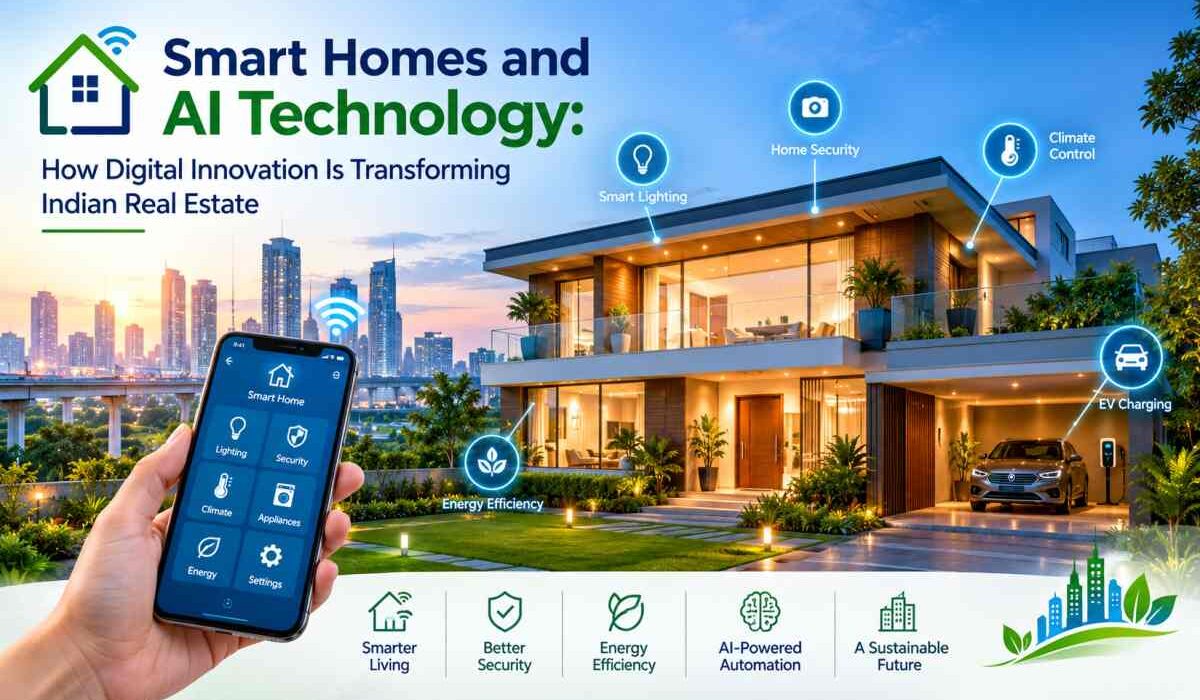
Smart Homes and AI Technology: How Digital Innovation Is Transforming Indian Real Estate
Introduction
The Indian real estate industry is experiencing a major technological transformation. Traditional residential properties are gradually evolving into intelligent living spaces equipped with advanced automation, artificial intelligence, and connected devices. From voice-controlled lighting to AI-powered security systems, smart homes are changing how people experience comfort, convenience, safety, and energy efficiency.
As urbanization accelerates and digital infrastructure improves, smart homes and AI technology are becoming increasingly relevant in India’s residential property market. Homebuyers are exploring properties that offer automated appliances, intelligent security solutions, energy management systems, and seamless digital connectivity.
Real estate developers are also recognizing the potential of smart home technology to differentiate their projects and meet changing customer expectations. Digital innovation is influencing everything from property design and construction to home management and real estate investment decisions.
In this article, we explore how artificial intelligence, the Internet of Things (IoT), automation, and other digital technologies are transforming Indian real estate and shaping the future of residential living.
1. What Are Smart Homes and AI Technology?
A smart home is a residential property equipped with internet-connected devices and automated systems that allow homeowners to monitor, control, and manage various household functions.
These systems may include smart lighting, security cameras, automated curtains, connected appliances, intelligent thermostats, and digital door locks.
Artificial intelligence enhances smart home technology by analyzing information, identifying patterns, and supporting automated decisions.
For example, an AI-enabled energy management system can learn household electricity usage patterns and recommend adjustments to reduce unnecessary consumption.
Key Components of Smart Homes
Modern smart homes typically incorporate several technologies:
- Artificial Intelligence: Supports intelligent automation and personalized recommendations.
- Internet of Things: Connects household devices through digital networks.
- Home Automation: Controls lighting, appliances, security, and other systems.
- Smart Sensors: Detect motion, temperature, humidity, and environmental changes.
- Voice Assistants: Enable convenient voice-based device control.
- Cloud Connectivity: Supports remote monitoring and selected digital services.
Together, these technologies create connected living environments designed to improve everyday convenience and efficiency.
2. Growing Demand for Smart Homes in India
Interest in smart residential properties is developing as Indian consumers become more familiar with connected technologies.
Several factors are contributing to this shift.
Increasing Digital Adoption
The growing availability of smartphones, broadband connections, and digital services makes connected home systems more accessible.
Homeowners can manage compatible devices through mobile applications, even when away from their properties.
Changing Lifestyle Preferences
Urban households increasingly value convenience, flexibility, and efficient home management.
Smart devices allow residents to automate repetitive activities and customize their living environments.
Greater Focus on Home Security
Digital security systems are attracting attention among homeowners seeking additional monitoring and access-control options.
Smart locks, video doorbells, and connected cameras provide features that conventional systems may not offer.
Interest in Energy Efficiency
Rising awareness of electricity consumption is encouraging households to explore smart lighting, appliance scheduling, and energy monitoring.
Although actual savings vary, these systems can help residents identify inefficient usage patterns.
3. How Artificial Intelligence Is Transforming Modern Homes
Artificial intelligence is one of the most important technologies influencing the development of intelligent residential properties.
AI allows certain connected devices to move beyond simple remote control and provide more adaptive functionality.
Personalized Home Automation
AI-enabled systems can learn user preferences and automate selected household functions.
For example, a connected lighting system may adjust brightness according to occupancy, daylight availability, or programmed routines.
Intelligent Temperature Management
Smart climate-control systems can use temperature readings, occupancy information, and user preferences to optimize cooling schedules.
In Indian cities where air conditioning contributes significantly to household electricity use, efficient climate management can be particularly useful.
Predictive Equipment Maintenance
Connected appliances may monitor operating conditions and alert users when maintenance is required.
Early warnings can help homeowners address certain equipment problems before they become more expensive.
Smart Energy Recommendations
AI-based energy platforms can analyze electricity consumption and suggest changes to appliance schedules or operating settings.
These features support more informed household energy management.
However, AI capabilities differ significantly between products, and not every connected device provides genuinely intelligent functionality.
4. Smart Home Automation and Connected Living
Home automation is a major feature of technology-enabled residential properties.
It allows homeowners to coordinate compatible devices through centralized applications, schedules, or voice commands.
Automated Lighting Systems
Smart lighting can be controlled remotely, scheduled, or activated through motion sensors.
Homeowners can create lighting routines for different activities and reduce unnecessary electricity use.
Smart Appliances
Connected refrigerators, washing machines, air conditioners, and other appliances may provide remote monitoring, notifications, and scheduling features.
Some products also offer usage reports and maintenance reminders.
Automated Curtains and Blinds
Motorized window coverings can operate according to programmed schedules or daylight conditions.
They may also help manage sunlight entering a room, improving comfort during hot weather.
Centralized Home Control
A home automation platform can bring compatible devices together through a single interface.
Compatibility remains important because products from different manufacturers do not always communicate seamlessly.
Homebuyers should evaluate interoperability before investing in extensive automation systems.
5. AI-Powered Home Security and Safety
Security is an important consideration for residential property buyers, especially in densely populated urban environments.
Smart home technology provides additional options for monitoring properties and managing access.
Smart Surveillance Cameras
Connected security cameras may offer motion detection, mobile notifications, and remote viewing.
Some AI-enabled models can distinguish between different types of movement, potentially reducing unnecessary alerts.
Digital Door Locks
Smart locks can support access through PIN codes, mobile applications, or other authentication methods.
They may also allow temporary access permissions for authorized visitors.
Video Doorbells
Video doorbells enable residents to view and communicate with visitors through connected devices.
These systems can be useful for apartment residents and independent homeowners.
Emergency Detection Systems
Connected smoke detectors, gas-leak sensors, and water-leak monitoring devices can provide timely alerts.
However, smart monitoring should complement—not replace—required safety equipment and established emergency procedures.
Homeowners must also protect connected security devices through strong passwords, regular software updates, and secure network settings.
6. Smart Homes and Energy-Efficient Living
Energy efficiency is becoming an important feature of modern residential development.
Smart home systems can help households monitor electricity consumption and reduce avoidable waste.
Intelligent Energy Monitoring
Smart meters and compatible monitoring devices provide information about electricity usage.
Some systems offer appliance-level estimates, helping residents identify areas where consumption may be reduced.
Smart Lighting Management
Motion sensors, timers, and automated schedules can prevent lights from remaining switched on unnecessarily.
Efficient Cooling Systems
Connected air conditioners and smart controllers can adjust operating schedules based on household requirements.
Energy savings depend on building insulation, equipment efficiency, climate conditions, and actual usage.
Solar Energy Integration
Some smart home platforms can monitor rooftop solar generation and household electricity consumption.
Compatible systems may help homeowners understand when solar electricity is available and manage selected appliances accordingly.
Water Management Technology
Smart water meters and leak-detection sensors can help identify unusual consumption patterns.
These technologies may support water conservation and reduce damage caused by undetected leaks.
7. Role of IoT in Indian Real Estate Development
The Internet of Things is connecting individual smart devices with broader building management systems.
For residential developers, IoT offers opportunities to introduce intelligent features into apartment complexes and gated communities.
Smart Residential Communities
Connected residential developments may incorporate automated access controls, visitor management, and digital maintenance platforms.
Intelligent Parking Systems
Sensor-based parking solutions can provide information about available spaces and improve parking management.
Smart Waste Management
Connected waste containers and monitoring systems can support more efficient collection planning in large residential communities.
Building Equipment Monitoring
IoT sensors can monitor selected equipment, such as pumps, elevators, and electrical systems.
Maintenance teams may use this information to identify unusual operating conditions.
Digital Facility Management
Residents can submit maintenance requests, receive community announcements, and track service updates through dedicated applications.
These systems can improve communication between residents, property managers, and maintenance teams.
8. How Smart Homes Are Influencing Property Values
Technology-enabled amenities can influence how buyers evaluate residential properties.
Modern homebuyers often compare properties based on location, construction quality, amenities, security, and long-term operating costs.
Smart home features may contribute to a property’s attractiveness when they provide practical benefits.
Increased Buyer Interest
Properties offering reliable security systems, efficient appliances, and convenient automation may appeal to technology-conscious buyers.
Differentiation in Competitive Markets
Developers can use smart features to distinguish residential projects from comparable developments.
Potential Rental Appeal
Tenants seeking convenience and modern amenities may prefer properties with useful connected systems.
Long-Term Property Functionality
Homes with adaptable wiring, reliable internet infrastructure, and interoperable technology may be easier to upgrade.
However, smart home technology does not automatically increase property value.
Location, market demand, construction quality, maintenance costs, and buyer preferences remain major determinants of property prices.
9. Smart Home Technology in Luxury and Affordable Housing
Smart home adoption is not limited to premium residential properties.
Different market segments are incorporating technology according to buyer requirements and project budgets.
Luxury Residential Properties
Premium homes may include integrated automation platforms, advanced lighting controls, intelligent climate systems, and comprehensive security networks.
Luxury developers may also offer centralized control of entertainment systems, curtains, and selected household appliances.
Mid-Range Residential Projects
Mid-market housing developments may focus on practical technologies such as smart locks, video doorbells, energy monitoring, and automated lighting.
Affordable Housing
Budget-conscious homeowners can introduce basic automation through individual smart devices without installing an expensive integrated system.
Examples include smart bulbs, connected plugs, and entry-level security sensors.
The affordability of smart technology depends on installation requirements, connectivity, maintenance, and product lifespan.
10. PropTech and Digital Innovation in Real Estate
Digital innovation is transforming more than the physical home.
Property technology, commonly known as PropTech, is changing how residential properties are marketed, purchased, managed, and maintained.
Virtual Property Tours
Three-dimensional walkthroughs and virtual tours allow prospective buyers to explore properties remotely.
These tools can help buyers shortlist properties before scheduling physical visits.
AI-Powered Property Recommendations
Some digital real estate platforms use algorithms to recommend properties based on location, budget, amenities, and browsing preferences.
Digital Documentation
Electronic records and online workflows can simplify certain administrative processes.
However, property registration, identity verification, and legal documentation must follow applicable regulations.
Data-Driven Property Analysis
Developers and investors can use digital tools to analyze market activity, property characteristics, and infrastructure developments.
Online Property Management
Digital platforms help property managers track maintenance requests, service schedules, payments, and resident communications.
Together, these technologies are making real estate operations more connected and information-driven.
11. Challenges of Smart Home Adoption in India
Despite the benefits, smart home technology presents several challenges.
Initial Installation Costs
Advanced automation systems can require substantial investment in equipment, wiring, installation, and configuration.
Internet Connectivity
Many smart devices depend on reliable network connections.
Poor connectivity can affect remote access and certain automated features.
Cybersecurity Risks
Connected devices may become vulnerable when manufacturers stop providing security updates or users rely on weak authentication.
Data Privacy Concerns
Smart cameras, voice assistants, and occupancy sensors may collect sensitive household information.
Homeowners should understand how their devices store, process, and share data.
Device Compatibility
Products from different brands may use different communication standards.
Choosing compatible devices can reduce integration problems.
Maintenance and Upgrades
Smart systems may require software updates, battery replacements, technical support, and occasional hardware upgrades.
Buyers should consider these ongoing costs before purchasing.
12. Future of Smart Homes and AI Technology in India: 2027 and Beyond
The future of Indian residential real estate is likely to involve closer integration between digital technology, energy efficiency, and building design.
Several emerging developments could influence the market.
More Adaptive AI Automation
Future systems may offer improved personalization by responding to household routines and environmental conditions.
Greater Device Interoperability
Industry efforts toward common connectivity standards may make it easier for compatible products from different manufacturers to work together.
Integration With Sustainable Buildings
Smart energy management, efficient cooling, solar monitoring, and water conservation technologies may become increasingly important in residential developments.
Expansion of Connected Communities
Large housing projects may introduce more integrated systems for access management, maintenance, utilities, and resident services.
Increased Focus on Privacy
As connected devices become more common, secure software, transparent data policies, and long-term product support will become increasingly important purchasing considerations.
Wider Availability of Basic Automation
Competition and product innovation may make selected smart home features more accessible to a broader range of Indian households.
These developments suggest that smart living will continue evolving, although adoption rates will vary across cities, income groups, and property types.
13. Tips for Homebuyers Investing in Smart Properties
Before purchasing a smart home, buyers should evaluate both the property and its technology infrastructure.
Important considerations include:
- Check whether installed smart devices are compatible with commonly available platforms.
- Review the manufacturer’s software update and support policies.
- Confirm whether essential functions work during internet outages.
- Understand installation, subscription, maintenance, and replacement costs.
- Ask how household data is collected, stored, and protected.
- Evaluate whether energy-saving claims are supported by realistic usage estimates.
- Check warranty coverage and availability of local technical support.
- Prioritize construction quality, location, legal documentation, and essential amenities over unnecessary technology features.
A well-planned smart home should offer practical convenience without creating excessive complexity or maintenance expenses.
Conclusion
Smart homes and AI technology are transforming Indian real estate by introducing new possibilities for automation, security, energy management, and connected living.
From intelligent lighting and smart appliances to IoT-enabled residential communities, digital innovation is influencing how modern homes are designed, marketed, and managed.
For homeowners, these technologies can provide greater convenience and improved visibility into household operations. For developers, smart features offer opportunities to differentiate projects and respond to evolving buyer expectations.
However, successful smart home adoption requires careful consideration of affordability, cybersecurity, privacy, compatibility, and long-term maintenance.
As India’s digital infrastructure and residential technology ecosystem continue developing, smart homes are likely to become an increasingly important part of the country’s real estate landscape.
The future of Indian housing will not depend on technology alone. It will depend on how effectively intelligent systems are combined with sustainable design, reliable infrastructure, and the everyday needs of residents.