
 By
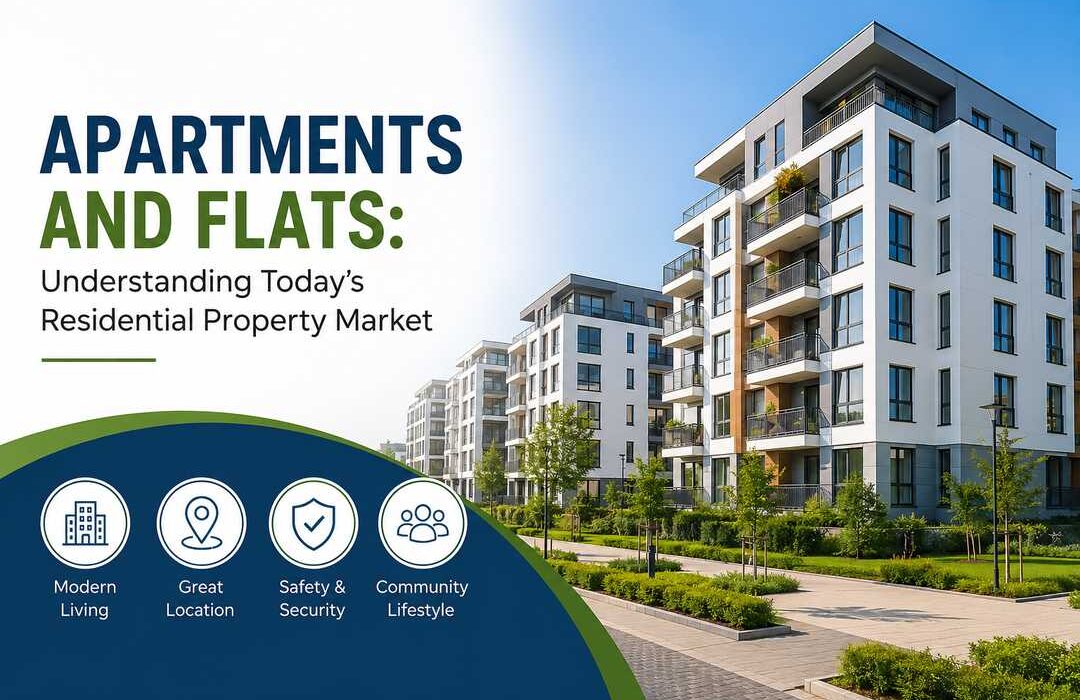
By Apartments and Flats: Understanding Today’s Residential Property Market
The residential property market has changed significantly over the years, and apartments and flats continue to be among the most popular housing options for individuals, families, and property investors. As cities expand and lifestyles become more urban, buyers increasingly look for homes that offer convenience, security, accessibility, and modern amenities. Apartments and flats often meet these needs while providing different choices based on budget, location, size, and lifestyle.
For first-time buyers, understanding the residential property market can be challenging. Property prices vary widely depending on location, construction quality, amenities, connectivity, demand, and future development. At the same time, changing buyer preferences and evolving housing trends are influencing how people evaluate apartments and flats.
Whether you are planning to purchase your first home, upgrade your current residence, or explore residential real estate as an investment, understanding the factors that shape the apartment and flat market can help you make a more informed decision.
What Are Apartments and Flats?
The terms “apartment” and “flat” are commonly used to describe individual residential units within a larger building or residential complex. In many regions, the terms are used interchangeably, although local usage can differ.
An apartment building typically contains multiple residential units, with shared facilities such as entrances, elevators, parking areas, corridors, gardens, and recreational spaces. Modern residential projects may also include amenities such as fitness centers, swimming pools, children’s play areas, community halls, security systems, and landscaped gardens.
Apartments can range from compact studio units to spacious multi-bedroom homes. Common configurations include one-bedroom, two-bedroom, three-bedroom, and four-bedroom apartments. The right choice depends on household size, lifestyle requirements, budget, and long-term plans.
Why Apartments and Flats Are So Popular
One of the biggest reasons apartments remain popular is convenience. Modern residential developments are often located near schools, hospitals, shopping centers, offices, transportation facilities, and entertainment destinations.
For many buyers, living in an apartment also means access to shared amenities without having to maintain them independently. Instead of owning a private garden, gym, or recreational area, residents can use facilities maintained by the residential community.
Security is another important factor. Many apartment complexes provide controlled entry, security personnel, CCTV monitoring, intercom systems, and other safety features. These facilities can be particularly attractive to families and people who spend significant amounts of time away from home.
Apartments can also provide an efficient use of urban land. As cities become more densely populated, vertical residential development allows more households to live within well-connected areas.
Understanding the Current Residential Property Market
The residential property market is influenced by several interconnected factors. Property prices are not determined by a single element; instead, they reflect supply, demand, economic conditions, infrastructure development, financing costs, and buyer preferences.
Location remains one of the most important factors. Apartments located in established neighborhoods with strong infrastructure and good connectivity often attract consistent demand. Properties near major roads, public transportation, educational institutions, healthcare facilities, and commercial areas can be particularly appealing.
At the same time, emerging neighborhoods can offer opportunities for buyers seeking relatively affordable properties with potential for future development. However, buyers should carefully research infrastructure plans, accessibility, construction activity, and local market conditions before making a decision.
The Importance of Location
The old real estate principle of “location matters” continues to be highly relevant. A well-designed apartment may not provide the same value if it is located far from essential services or has poor connectivity.
When evaluating an apartment, buyers should consider travel time to work, schools, hospitals, markets, and other frequently visited places. Road conditions, public transportation, traffic patterns, and future infrastructure projects can also affect the property’s long-term attractiveness.
Neighborhood development is another important consideration. New roads, metro systems, business districts, educational institutions, and commercial centers can influence residential demand. However, buyers should distinguish between officially planned projects and unverified future-development claims.
Apartment Sizes and Floor Plans
Apartment sizes have become increasingly diverse. Developers offer different floor plans to meet the needs of different types of households.
Studio and one-bedroom apartments may appeal to individuals, young professionals, or smaller households. Two-bedroom apartments are often popular among small families, while three-bedroom and larger homes can provide additional space for growing families.
Floor plan efficiency is just as important as total area. A well-designed apartment can make better use of available space through practical room layouts, storage areas, natural lighting, ventilation, and functional kitchens and bathrooms.
Before purchasing, buyers should evaluate how the available space will work with their daily routine. A larger apartment is not necessarily better if significant portions of the space are difficult to use.
Amenities and Modern Apartment Living
Amenities have become an important part of modern residential projects. Depending on the development, buyers may find facilities such as landscaped gardens, fitness centers, swimming pools, children’s play zones, walking paths, clubhouses, sports areas, parking facilities, and community spaces.
Technology is also influencing residential development. Smart access systems, video doorbells, security cameras, automated lighting, visitor-management systems, and other digital features are becoming more common in some projects.
However, amenities should be evaluated carefully. More facilities can increase maintenance expenses, and not every amenity will be equally useful to every resident. Buyers should consider whether the facilities genuinely add value to their lifestyle rather than choosing a property simply because it has a long amenities list.
Affordability and Home Buying Decisions
Affordability is one of the most important considerations when purchasing an apartment. The advertised property price is only one part of the total cost.
Buyers may also need to account for registration charges, taxes, maintenance deposits, parking charges, interior work, utility connections, association fees, insurance, and other applicable expenses.
A practical home-buying budget should consider both the initial purchase cost and ongoing expenses. Buyers using a home loan should also evaluate the impact of interest rates, loan tenure, down payment requirements, and monthly repayments.
Financial planning is particularly important because a home is usually a long-term commitment. Buyers should avoid stretching their finances beyond a comfortable level simply to purchase a larger property.
Apartments as a Real Estate Investment
Apartments are not only homes; they can also form part of a residential real estate investment strategy. Investors typically consider factors such as rental demand, location, property appreciation potential, occupancy levels, maintenance costs, and resale prospects.
Properties in areas with strong employment opportunities, educational institutions, transportation links, and established infrastructure may attract a larger pool of potential tenants.
However, real estate investment is not guaranteed to generate profits. Property values can rise or fall depending on market conditions, and rental income may vary. Investors should conduct careful research and consider the total costs associated with purchasing and maintaining a property.
New Apartments vs. Resale Flats
Buyers often have to choose between purchasing a newly constructed apartment and a resale flat.
New properties may offer modern designs, updated amenities, new infrastructure, and developer payment plans. However, buyers should carefully review the developer’s reputation, project approvals, construction quality, possession timelines, and applicable documentation.
Resale apartments can sometimes offer advantages such as established neighborhoods, existing infrastructure, and the opportunity to inspect the actual property before purchasing. Buyers may also be able to understand the building’s maintenance standards and community environment more easily.
The better choice depends on the buyer’s priorities, budget, timeline, and willingness to manage potential renovation or repair requirements.
What Buyers Should Check Before Purchasing
Buying an apartment involves more than choosing a visually attractive home. Proper due diligence is essential.
First, verify the property’s ownership and legal documentation. Buyers should review relevant approvals, title documents, building permissions, and other required records according to local regulations.
Construction quality should also be assessed. Check the quality of materials, plumbing, electrical systems, doors, windows, flooring, ventilation, and water supply.
For completed properties, inspect the actual apartment and common areas. Look for signs of poor maintenance, water leakage, structural concerns, or inadequate ventilation.
Buyers should also understand the maintenance structure. Ask about monthly maintenance charges, parking arrangements, association rules, utility costs, and major upcoming repair expenses.
Professional legal and property advice can be valuable when significant amounts of money are involved.
The Role of Connectivity and Infrastructure
Infrastructure development can have a strong influence on residential property demand. Better roads, public transportation, airports, rail connectivity, educational facilities, healthcare centers, and commercial developments can make neighborhoods more attractive.
For apartment buyers, connectivity is important not only for daily convenience but also for long-term property usability. A home that is easy to reach can remain attractive to future buyers and tenants.
However, infrastructure should be evaluated based on current realities and reliable development information. Buyers should not make a purchase solely on promises of future projects without verifying official information.
Sustainability in Modern Residential Properties
Environmental considerations are becoming increasingly relevant in residential real estate. Many modern projects incorporate features such as rainwater harvesting, energy-efficient lighting, solar power systems, waste-management facilities, landscaped green spaces, and improved natural ventilation.
Sustainable design can potentially reduce resource consumption and contribute to a more comfortable living environment. Buyers interested in long-term efficiency should ask developers or property sellers about energy use, water management, waste disposal, and green-building features.
Sustainability is also becoming connected with property value. As buyers become more conscious of operating costs and environmental impact, efficient homes may become increasingly attractive.
Changing Preferences of Homebuyers
Today’s homebuyers are increasingly focused on flexibility, convenience, and quality of life. A home is no longer viewed simply as a collection of rooms. Buyers often consider work-from-home requirements, internet connectivity, recreational facilities, storage, natural light, security, and access to essential services.
Flexible spaces have become particularly useful for households that need a dedicated study or work area. Larger balconies, better ventilation, natural lighting, and community spaces can also influence purchasing decisions.
These changing preferences are encouraging developers to rethink apartment layouts and residential amenities.
Common Mistakes to Avoid
One common mistake is focusing only on the apartment’s appearance. Attractive interiors can make a property appealing, but buyers should also evaluate location, construction quality, documentation, maintenance costs, and overall value.
Another mistake is ignoring the neighborhood. A beautiful apartment may not be practical if daily commuting is difficult or essential services are far away.
Buyers should also avoid making decisions based entirely on emotional excitement. Comparing multiple properties, reviewing costs, and conducting due diligence can reduce the risk of making an unsuitable purchase.
Finally, buyers should understand all terms and conditions before signing agreements or making significant payments.
Future Outlook for Apartments and Flats
The demand for apartments and flats is likely to remain an important part of the residential property market as urban populations grow and housing preferences continue to evolve.
Future residential projects are likely to focus increasingly on connectivity, technology, sustainability, community facilities, and efficient use of space. Buyers may also place greater importance on homes that support flexible lifestyles and changing household needs.
At the same time, affordability will remain a major factor. Developers and buyers will need to balance rising construction and land costs with the need for accessible housing.
The residential market will continue to vary from one city and neighborhood to another, making local research essential for anyone planning to buy or invest.
Final Thoughts
Apartments and flats remain one of the most common and practical forms of residential property in today’s housing market. Their popularity comes from a combination of convenience, security, location, shared amenities, and diverse housing options.
However, choosing the right apartment requires more than comparing prices and floor plans. Buyers should evaluate location, connectivity, construction quality, legal documentation, maintenance expenses, amenities, financing options, and long-term requirements.
Whether you are a first-time homebuyer, a growing family, or a property investor, understanding the residential property market can help you make a more confident decision. By researching the neighborhood, comparing properties, checking documentation, and planning your finances carefully, you can identify an apartment or flat that fits both your present needs and future goals.
As residential real estate continues to evolve, apartments and flats are expected to remain an important part of urban housing. The best property is not necessarily the largest or most expensive one—it is the home that offers the right combination of location, quality, affordability, convenience, and long-term value for your individual circumstances.