
 By
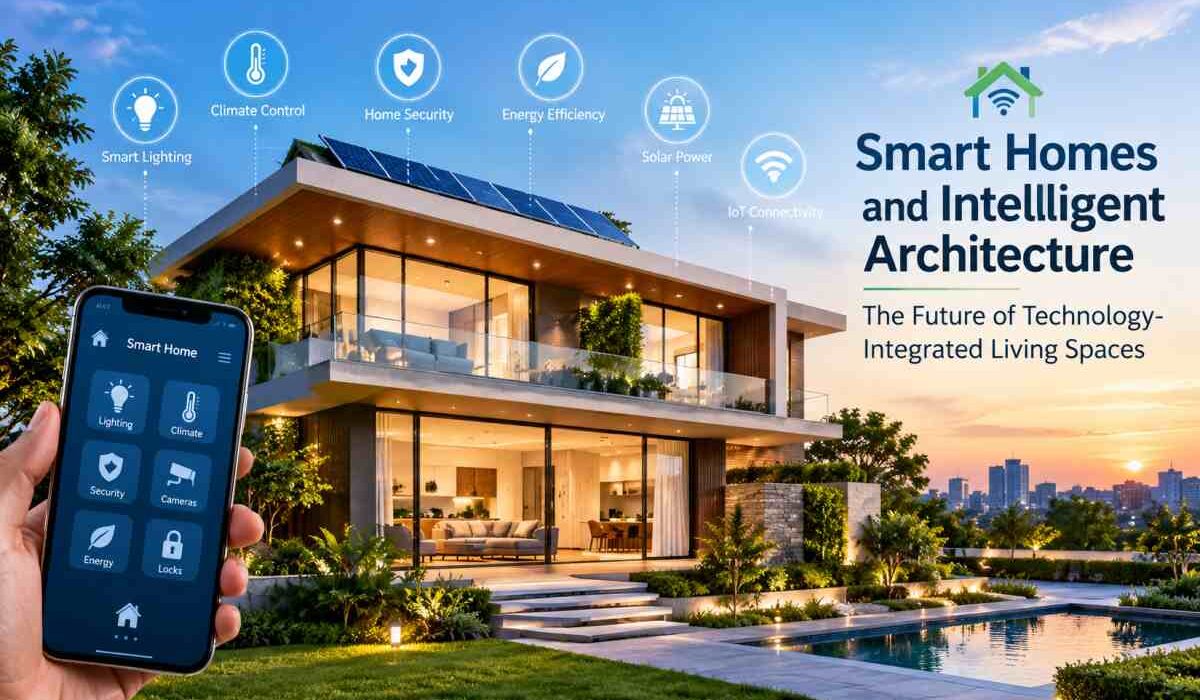
Smart Homes and Intelligent Architecture: The Future of Technology-Integrated Living Spaces
The architecture industry is experiencing a remarkable transformation as technology becomes an essential part of modern residential design. Traditional houses are evolving into intelligent living environments that combine comfort, sustainability, convenience, and advanced digital solutions. Smart homes and intelligent architecture are redefining how people interact with their living spaces, creating homes that respond to individual preferences and changing lifestyles.
With the rapid development of artificial intelligence (AI), the Internet of Things (IoT), automated building systems, and energy-efficient technologies, homeowners can now enjoy greater control over their properties. From intelligent lighting and automated climate control to advanced security systems and connected appliances, technology-integrated homes are becoming increasingly practical.
In India, growing urbanization, digital connectivity, and interest in sustainable living are encouraging architects and property developers to explore smart residential solutions.
This article examines the future of smart homes, the importance of intelligent architecture, emerging technologies, key benefits, challenges, and the innovations expected to shape modern living spaces.
What Are Smart Homes and Intelligent Architecture?
A smart home is a residential property equipped with connected devices and automated systems that allow homeowners to monitor, manage, and control different household functions.
These functions may include lighting, temperature regulation, security, entertainment, appliances, and energy consumption.
Smart home technologies generally operate through smartphone applications, voice assistants, sensors, or centralized control platforms.
Intelligent architecture, however, goes beyond installing smart devices. It involves designing buildings that integrate technology, environmental awareness, energy efficiency, and adaptable spaces from the beginning.
An intelligently designed home considers how technology interacts with architectural elements such as windows, ventilation, insulation, lighting, and spatial planning.
For example, an intelligent residential building may automatically adjust indoor lighting according to available daylight while optimizing ventilation and cooling systems to maintain comfortable temperatures.
The combination of smart technology and architectural planning creates responsive living environments that can improve everyday experiences.
Why Smart Homes Are Becoming Popular in India
India’s residential real estate sector is gradually embracing digital innovation. Modern homeowners increasingly value convenience, safety, connectivity, and efficient resource management.
Several factors are supporting interest in smart home technology in India.
1. Growing Demand for Modern Living
Urban homeowners are looking for residential properties that offer practical conveniences alongside attractive architectural designs.
Automated lighting, connected security systems, and intelligent appliances can make everyday household activities easier.
2. Increasing Digital Connectivity
The availability of broadband networks, smartphones, and connected devices has made smart home systems more accessible.
Homeowners can monitor supported devices remotely, provided the systems have reliable connectivity and appropriate security controls.
3. Focus on Energy Efficiency
Rising awareness of electricity consumption and environmental sustainability is encouraging the adoption of intelligent energy management solutions.
Smart thermostats, occupancy sensors, and automated lighting can help reduce unnecessary energy usage when correctly configured.
4. Interest in Home Security
Connected cameras, smart locks, motion detectors, and automated alerts provide additional monitoring options for residential properties.
However, these systems should complement rather than replace reliable physical security measures.
5. Changing Lifestyle Preferences
Hybrid working arrangements, digital entertainment, and multifunctional rooms are influencing residential design.
Technology-integrated architecture helps create flexible spaces that support different activities.
Key Technologies Transforming Smart Homes and Intelligent Architecture
Modern smart residential buildings depend on several interconnected technologies.
Understanding these innovations helps architects and homeowners make informed design decisions.
1. Artificial Intelligence in Smart Homes
Artificial intelligence is becoming an important component of intelligent residential environments.
AI-enabled systems can analyze patterns, automate routine functions, and provide personalized recommendations.
For example, compatible climate-control systems may learn preferred temperature settings and adjust schedules based on occupancy patterns.
Similarly, intelligent lighting platforms can create automated routines for different activities.
AI applications in smart homes include:
- Personalized lighting and temperature settings.
- Automated appliance scheduling.
- Energy consumption analysis.
- Voice-enabled household assistance.
- Predictive maintenance notifications.
Although these features can improve convenience, their effectiveness depends on device capabilities, data quality, and user configuration.
2. Internet of Things (IoT)
The Internet of Things in smart homes enables connected devices to exchange information through communication networks.
IoT technology allows different household systems to operate together.
For example, a motion sensor may activate hallway lighting, while a connected energy monitor displays electricity consumption through a mobile application.
Common IoT-enabled residential devices include smart switches, thermostats, sensors, doorbells, lighting systems, and connected appliances.
Architects should consider network coverage, device compatibility, and maintenance access when incorporating these technologies into residential buildings.
3. Smart Lighting Systems
Lighting plays an essential role in residential architecture.
Intelligent lighting systems allow homeowners to control brightness, schedules, and, where supported, color temperature.
Some systems use daylight sensors to reduce artificial lighting when sufficient natural light is available.
Occupancy-based controls can also switch off unnecessary lighting in unused rooms.
Combining smart lighting with thoughtful window placement and daylight-oriented architecture can improve visual comfort while supporting energy efficiency.
4. Automated Climate Control
Maintaining comfortable indoor temperatures is especially important in India’s diverse climatic regions.
Smart climate-control systems can adjust heating, cooling, and ventilation equipment according to schedules, sensor readings, and occupancy.
In hot regions, automated shading and efficient cooling controls may help manage solar heat gain.
However, intelligent controls work best when combined with passive architectural strategies such as insulation, cross-ventilation, reflective roofing, and appropriate building orientation.
5. Intelligent Home Security
Security technology is another significant feature of connected residential properties.
Smart security systems may include video doorbells, digital access controls, motion sensors, and connected alarms.
Some systems allow homeowners to receive notifications when unusual activity is detected.
When selecting these technologies, residents should prioritize encrypted communication, strong authentication, software updates, and privacy-conscious camera placement.
The Role of Intelligent Architecture in Modern Residential Design
Intelligent architecture combines advanced technologies with practical building design.
Instead of treating automation as an additional feature, architects incorporate digital infrastructure into the planning process.
Integrated Building Design
Technology-integrated homes require careful coordination between architects, engineers, electricians, and automation specialists.
Electrical layouts, network connections, equipment locations, and control systems should be planned early.
This approach can reduce unnecessary modifications during construction and simplify future maintenance.
Flexible and Adaptable Living Spaces
Modern households increasingly need rooms that serve multiple purposes.
A living room may function as an entertainment area, workspace, or study environment.
Smart lighting, adjustable furniture, and automated environmental controls can help support these different activities.
Flexible architecture also allows homes to accommodate changing family requirements over time.
Responsive Building Envelopes
A building envelope includes the walls, roof, windows, and other elements separating indoor spaces from outdoor conditions.
Advanced architectural systems may incorporate automated shading, responsive glazing, or sensor-controlled ventilation.
These technologies can help regulate daylight, heat, and airflow.
However, their suitability depends on local climate, installation costs, and long-term maintenance requirements.
Smart Homes and Sustainable Architecture
One of the most promising applications of intelligent architecture is its connection with sustainable building design.
Sustainable smart homes aim to improve resource efficiency while maintaining comfortable living conditions.
Energy-Efficient Building Systems
Connected energy monitors can help homeowners understand when and where electricity is being consumed.
Automated controls may reduce waste by switching off unused equipment or adjusting operating schedules.
Architectural measures such as insulation, natural lighting, and efficient ventilation remain equally important.
Solar Energy Integration
Rooftop solar photovoltaic systems can be integrated with suitable home energy management platforms.
These platforms may monitor solar generation, household electricity demand, and battery storage where installed.
Depending on the system, homeowners may schedule certain appliances to operate during periods of higher solar generation.
Smart Water Management
Water conservation is another important consideration in Indian residential architecture.
Connected leak detectors, water meters, and automated irrigation controls can help identify excessive consumption.
When combined with rainwater harvesting, efficient plumbing fixtures, and responsible landscaping, these systems can support more sustainable water management.
Sustainable Construction Materials
Intelligent architecture should also consider the environmental impact of building materials.
Locally appropriate materials, recycled components, durable finishes, and responsibly sourced construction products can contribute to sustainability goals.
Technology alone does not make a building environmentally friendly; overall performance depends on design, construction, operation, and maintenance.
Benefits of Smart Homes and Technology-Integrated Living Spaces
Smart residential architecture offers several potential advantages.
Improved Convenience
Automated household routines can simplify everyday activities.
Residents may control compatible lighting, appliances, and security devices through centralized applications or voice commands.
Better Energy Management
Smart controls provide opportunities to monitor electricity usage and reduce unnecessary consumption.
Actual savings depend on building design, equipment efficiency, household behavior, and system settings.
Enhanced Residential Comfort
Personalized lighting, temperature scheduling, and automated shading can improve the usability of living spaces.
Greater Accessibility
Voice controls, automated doors, and accessible interfaces may assist older adults and people with disabilities.
These features are most effective when incorporated into inclusive architectural design rather than used as substitutes for accessibility standards.
Improved Property Appeal
Technology-ready homes may attract buyers interested in convenience and modern amenities.
However, smart features do not automatically increase property value. Their market appeal depends on reliability, location, buyer preferences, and maintenance costs.
Smart Home Design Trends Shaping 2027
As residential technologies develop, several architectural trends are likely to influence future projects.
1. AI-Assisted Home Automation
More residential systems are expected to offer personalized automation and intelligent energy recommendations.
Homeowners may increasingly prefer systems that coordinate multiple functions instead of requiring separate controls for every device.
2. Biophilic Smart Architecture
Biophilic architecture incorporates natural elements into building design.
Future technology-integrated homes may combine indoor greenery, natural ventilation, daylight optimization, and automated environmental monitoring.
This approach emphasizes the relationship between technological convenience and human well-being.
3. Voice-Controlled Living Environments
Voice-enabled controls are likely to remain important in connected homes.
However, architects should also provide practical manual controls and accessible alternatives.
4. Smart Modular Homes
Modular construction offers opportunities to integrate electrical infrastructure, sensors, and connected building systems during manufacturing.
This may simplify installation and improve coordination when supported by appropriate design and quality controls.
5. Interoperable Smart Home Ecosystems
Homeowners increasingly need devices from different manufacturers to work together.
Interoperability initiatives, including the Matter smart home standard, aim to improve compatibility among supported products.
Designing around open standards can help reduce dependence on a single technology provider.
6. Privacy-Focused Intelligent Architecture
As homes collect more information through sensors and connected devices, privacy will become an increasingly important design consideration.
Local processing, secure networks, transparent data policies, and user-controlled settings can help residents maintain greater control over household information.
Challenges of Implementing Smart Home Technology
Despite its advantages, intelligent residential architecture presents several challenges.
Initial installation costs: Advanced automation, connected appliances, and specialized infrastructure can increase project expenses.
Compatibility issues: Devices from different manufacturers may not always communicate effectively.
Cybersecurity risks: Poorly secured connected devices may expose household networks or personal information.
Maintenance requirements: Software updates, equipment replacement, and technical support create ongoing responsibilities.
Internet and power dependency: Certain smart functions may become unavailable during connectivity or electricity disruptions.
Technology obsolescence: Rapid innovation can make some proprietary systems difficult to upgrade or repair.
To address these challenges, architects should prioritize dependable equipment, secure configurations, accessible maintenance, and systems that retain essential manual functionality.
How Architects Can Design Future-Ready Smart Homes
Creating a successful intelligent home requires more than selecting modern gadgets.
Architects should begin by understanding residents’ lifestyles, accessibility needs, climate conditions, and available budgets.
The design process should include adequate electrical capacity, reliable network infrastructure, and suitable locations for connected equipment.
Passive design strategies should be prioritized before adding energy-consuming technologies.
For Indian homes, climate-responsive features such as shaded balconies, ventilated courtyards, efficient windows, and appropriate roof treatments can provide lasting benefits.
Architects should also consider modular wiring arrangements and accessible service areas to simplify future upgrades.
Importantly, residents must retain control over automated systems. Manual overrides, clear interfaces, and reliable operation during network disruptions can improve usability.
A future-ready home is not necessarily the one with the largest number of connected devices. It is the one where architecture and technology work together to meet genuine household needs.
The Future of Smart Homes in Indian Real Estate
The future of intelligent residential architecture in India will likely be influenced by digital infrastructure, sustainability expectations, and evolving consumer preferences.
Premium housing developments may continue introducing integrated automation, energy monitoring, and connected security features.
Meanwhile, affordable smart switches, sensors, and interoperable devices could make selected automation functions accessible to a wider range of households.
Architects and developers will also need to address India’s varied climate conditions, infrastructure limitations, and differences in household budgets.
The most successful projects will balance technological innovation with affordability, accessibility, security, and environmental performance.
Rather than viewing smart technology as a luxury feature, future residential design may increasingly treat appropriate digital infrastructure as part of practical building planning.
Frequently Asked Questions (FAQs)
1. What is intelligent architecture in smart homes?
Intelligent architecture integrates building design with connected technologies, automation, energy management, and adaptable systems to create responsive and efficient living environments.
2. Are smart homes energy-efficient?
Smart homes can improve energy efficiency through automated lighting, climate controls, and consumption monitoring. Actual performance depends on equipment, building design, and household usage.
3. Is smart home technology suitable for Indian houses?
Yes. Smart technology can be incorporated into apartments, independent houses, and residential developments. Solutions should match local infrastructure, climate conditions, and household budgets.
4. What technologies are used in intelligent homes?
Common technologies include AI-enabled automation, IoT sensors, smart lighting, connected security systems, automated climate controls, and energy management platforms.
5. What is the future of smart home architecture?
Future developments are likely to emphasize interoperable devices, AI-assisted automation, sustainable building systems, adaptable living spaces, and stronger privacy protections.
Conclusion
Smart homes and intelligent architecture are transforming the future of technology-integrated living spaces by bringing digital innovation into everyday residential environments.
Artificial intelligence, IoT connectivity, automated lighting, intelligent climate control, and energy monitoring offer opportunities to improve convenience, comfort, and resource management.
However, successful smart home architecture requires more than advanced technology. Thoughtful spatial planning, sustainable materials, passive cooling, cybersecurity, accessibility, and long-term maintenance are equally important.
As India’s residential sector evolves, technology-integrated architecture can play a meaningful role in creating modern, efficient, and adaptable homes.
The future of residential design lies in combining architectural intelligence with practical technology—creating living spaces that respond to people’s needs while supporting a more sustainable built environment.