
 By
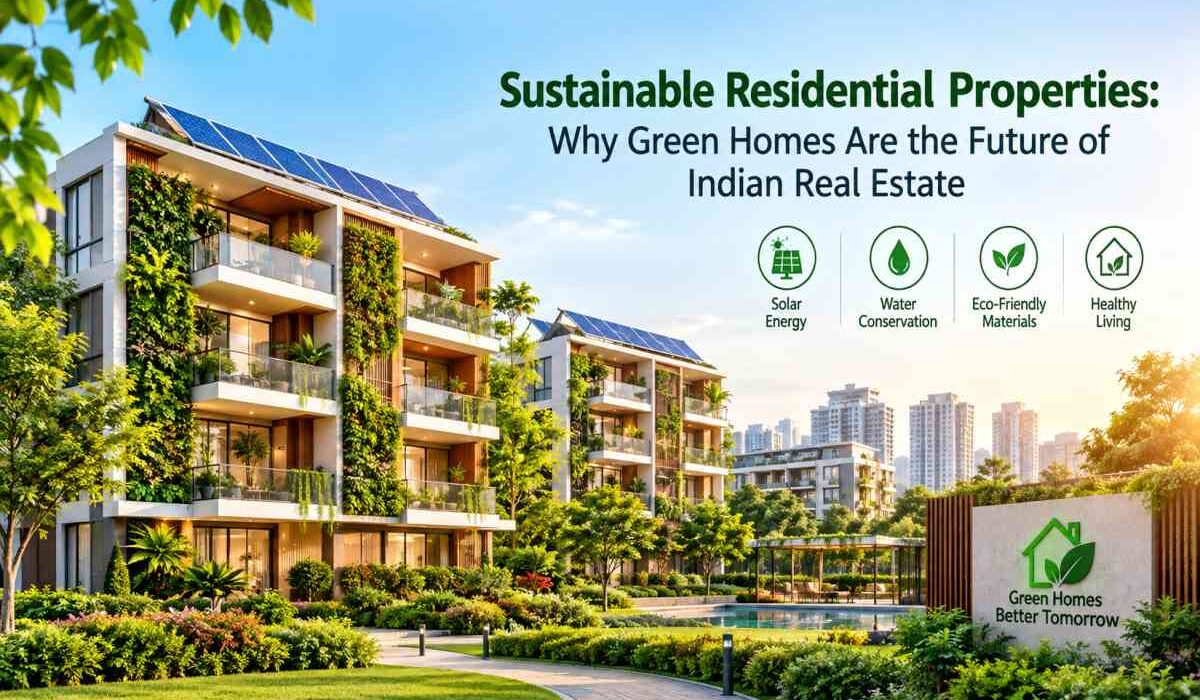
Sustainable Residential Properties: Why Green Homes Are the Future of Indian Real Estate
The Indian real estate industry is experiencing a significant transformation as sustainability becomes an increasingly important consideration for homebuyers, developers, and property investors. Rising energy costs, growing environmental awareness, rapid urbanization, and changing lifestyle preferences are encouraging the development of sustainable residential properties across India.
Modern homebuyers are no longer interested only in attractive interiors, spacious rooms, and convenient locations. They are also considering energy efficiency, water conservation, natural ventilation, green surroundings, and environmentally responsible construction materials.
This changing mindset has increased interest in green homes in India, particularly in major cities such as Bengaluru, Mumbai, Hyderabad, Pune, Chennai, and Delhi NCR.
Sustainable housing aims to reduce environmental impact while creating healthier, more comfortable, and resource-efficient living spaces. From solar-powered apartments to residential communities with rainwater harvesting systems, green building technologies are gradually reshaping India’s housing sector.
As India moves toward its long-term sustainability and climate goals, environmentally responsible residential development is expected to play an increasingly important role.
This article explores why sustainable residential properties are gaining attention, their major benefits, essential green building features, challenges, and the future of eco-friendly housing in Indian real estate.
What Are Sustainable Residential Properties?
Sustainable residential properties are homes designed, constructed, and operated to minimize environmental impact while improving resource efficiency and occupant comfort.
Unlike conventional residential buildings, sustainable homes prioritize responsible energy consumption, efficient water management, environmentally conscious materials, and improved indoor environmental quality.
These properties incorporate modern architectural practices and technologies that help reduce operating expenses and conserve natural resources.
Common examples include:
- Solar-powered residential buildings
- Energy-efficient apartments
- Eco-friendly independent houses
- Green-certified residential communities
- Smart homes with automated energy management
- Residential projects featuring rainwater harvesting
- Buildings designed for natural lighting and ventilation
The primary objective of sustainable housing is to balance environmental responsibility, economic efficiency, and comfortable living.
A well-designed green home should remain practical, durable, and affordable to operate throughout its lifespan.
Why Sustainable Residential Properties Are Growing in India
India’s expanding urban population and increasing demand for residential accommodation create both opportunities and environmental challenges.
Traditional residential construction can consume significant quantities of electricity, water, and raw materials. Sustainable development offers practical solutions to reduce these demands.
1. Increasing Environmental Awareness
Environmental awareness is influencing residential property decisions.
Homebuyers are becoming more conscious of climate change, pollution, water shortages, and excessive energy consumption.
As a result, environmentally responsible residential projects are attracting attention from buyers who want comfortable homes with a smaller environmental footprint.
2. Rising Electricity Costs
Electricity expenses represent an important part of household operating costs.
Energy-efficient appliances, solar panels, LED lighting, and passive cooling systems can help reduce electricity consumption.
For homeowners, these features may deliver meaningful savings over time, depending on building design, energy tariffs, and usage patterns.
3. Growing Demand for Healthier Living
Indoor air quality, natural daylight, thermal comfort, and access to green spaces have become important residential considerations.
Sustainable homes frequently incorporate improved ventilation, low-emission materials, and landscaped outdoor areas.
These features can support healthier and more comfortable indoor environments.
4. Government Support for Sustainable Development
India has introduced policies and initiatives supporting energy efficiency, renewable energy, and environmentally responsible construction.
Programs promoting rooftop solar installations and energy-efficient buildings can encourage the adoption of green technologies.
However, available incentives depend on eligibility, location, and applicable government guidelines.
Top Features of Sustainable Residential Properties
Modern green residential projects in India combine architectural planning, innovative construction materials, and efficient building systems.
1. Solar Energy Systems
Solar power is an increasingly practical feature of sustainable residential properties.
Rooftop solar photovoltaic panels convert sunlight into electricity, helping reduce dependence on conventional grid power.
Residential buildings may use solar electricity for common-area lighting, elevators, water pumps, and household consumption.
The financial benefits depend on installation costs, available roof space, electricity consumption, and local regulations.
2. Rainwater Harvesting
Water conservation is essential in Indian cities facing seasonal water shortages.
Rainwater harvesting systems collect and store rainfall or direct it toward groundwater recharge systems.
Properly designed systems can reduce dependence on external water supplies and improve resource management.
3. Energy-Efficient Lighting and Appliances
LED lighting, efficient air conditioners, smart thermostats, and energy-rated appliances can reduce electricity consumption.
Automated lighting systems further improve efficiency by switching lights off when rooms are unoccupied.
These technologies make energy-efficient homes more practical for everyday living.
4. Natural Ventilation and Daylighting
Sustainable architecture emphasizes building orientation, window placement, shading, and airflow.
Properly positioned windows and ventilation openings can improve indoor comfort while reducing dependence on artificial lighting and mechanical cooling.
Climate-responsive design is particularly valuable in India’s diverse climatic regions.
5. Eco-Friendly Construction Materials
Green homes increasingly incorporate construction materials selected for durability, responsible sourcing, and reduced environmental impact.
Examples include fly ash bricks, recycled steel, certified timber, low-VOC paints, and suitable locally sourced materials.
Material selection should consider lifecycle impacts, structural performance, availability, and maintenance requirements.
6. Waste Management Systems
Modern residential communities may include waste segregation, composting facilities, and organized recycling systems.
Separating biodegradable and recyclable waste helps reduce landfill disposal.
Successful implementation also requires consistent participation from residents and effective building management.
Benefits of Investing in Sustainable Residential Properties
Sustainable housing offers advantages for homeowners, property investors, developers, and communities.
Lower Long-Term Operating Costs
One of the strongest benefits of sustainable residential properties is improved resource efficiency.
Energy-saving technologies and water-efficient fixtures can reduce recurring utility expenses.
Although some green features require higher initial investment, their operating savings may offset additional costs over time.
Improved Indoor Comfort
Green buildings often emphasize daylight, ventilation, insulation, and temperature management.
These design elements can create comfortable indoor spaces while reducing unnecessary energy consumption.
Potential Property Value Advantages
Residential properties with verified energy performance and desirable sustainability features may attract environmentally conscious buyers.
However, higher resale values are not guaranteed.
Location, construction quality, market demand, maintenance, and project credibility remain essential factors influencing property appreciation.
Reduced Environmental Impact
Energy-efficient construction and renewable energy systems can help reduce greenhouse gas emissions.
Water conservation, responsible waste management, and sustainable materials further contribute to environmental protection.
Better Resource Management
Sustainable communities encourage responsible consumption of electricity, water, and other essential resources.
This approach can support long-term operational resilience, particularly in areas facing infrastructure and resource pressures.
Green Building Certifications in India
Green building certifications help buyers and developers assess the environmental performance of residential projects.
Several recognized rating systems operate in India.
Indian Green Building Council (IGBC)
The Indian Green Building Council provides rating systems covering different building types, including residential developments.
Its assessment frameworks consider areas such as energy efficiency, water conservation, materials, site planning, and indoor environmental quality.
GRIHA Rating System
GRIHA, or Green Rating for Integrated Habitat Assessment, evaluates buildings using sustainability-related criteria.
It encourages resource-efficient construction and environmentally responsible building operations.
EDGE Certification
EDGE, developed by the International Finance Corporation, focuses on measurable resource efficiency.
Its certification framework assesses projected savings in energy, water, and embodied energy in materials against an applicable baseline.
Important: Homebuyers should verify the actual certification status of a residential project rather than relying only on promotional claims about sustainability.
Sustainable Residential Properties vs Traditional Homes
Understanding the differences between green homes and conventional residential properties can help buyers make informed decisions.
| Feature | Sustainable Residential Properties | Traditional Residential Properties |
|---|---|---|
| Energy consumption | Designed to improve energy efficiency | Depends on conventional building systems |
| Water management | Often includes conservation and reuse systems | May have limited conservation features |
| Construction materials | Prioritizes environmental performance | Often prioritizes cost and availability |
| Indoor comfort | Emphasizes ventilation and thermal efficiency | Varies according to building design |
| Initial investment | May involve additional upfront costs | May have lower initial costs |
| Maintenance expenses | Potentially lower utility costs | Depends on efficiency and maintenance |
| Environmental impact | Designed to reduce resource consumption | May have a larger environmental footprint |
Actual performance depends on construction quality, technology selection, climate, and building maintenance.
A conventional home upgraded with efficient systems can sometimes outperform a poorly designed property marketed as green.
Role of Smart Technology in Sustainable Housing
Smart home technology is becoming an important component of sustainable residential development.
Automation systems allow residents to monitor and manage electricity consumption, lighting, cooling, and household appliances.
Smart meters provide information about energy usage, helping residents identify opportunities to reduce unnecessary consumption.
Occupancy sensors can automatically adjust lighting and cooling systems when rooms are empty.
Some residential communities also use intelligent water monitoring systems to detect leaks and track consumption.
When properly configured, these technologies can improve operational efficiency without compromising convenience.
However, technology alone does not make a building sustainable. Good architectural design, responsible resource use, and regular maintenance remain equally important.
Sustainable Housing Trends Shaping Indian Real Estate in 2027
Several emerging developments are expected to influence the future of green residential projects in India.
1. Climate-Responsive Residential Architecture
Architects are increasingly exploring designs suited to local temperature, humidity, rainfall, and sunlight conditions.
Passive cooling, shaded balconies, insulated roofs, and strategic landscaping can improve thermal comfort.
2. Solar-Ready Residential Communities
Residential developers may increasingly incorporate rooftop solar infrastructure during initial construction.
Planning solar installations early can improve system integration and reduce the complexity of future upgrades.
3. Water-Efficient Apartment Complexes
Greywater recycling, efficient plumbing fixtures, and advanced water monitoring are likely to remain important sustainability features.
4. Green Landscaping and Urban Biodiversity
Residential communities are incorporating native plants, shaded pathways, gardens, and landscaped common spaces.
Appropriate landscaping can improve outdoor comfort while supporting local biodiversity.
5. Electric Vehicle Charging Infrastructure
As electric mobility develops, residential buildings are expected to place greater emphasis on EV-ready parking and charging infrastructure.
Safe electrical design and adequate power capacity will be important considerations.
Challenges Facing Sustainable Residential Development
Despite its advantages, sustainable housing faces several challenges in India.
Higher upfront investment: Solar installations, efficient building systems, and certain construction materials may increase initial development expenses.
Limited consumer awareness: Some buyers remain unfamiliar with green certifications and long-term operating benefits.
Maintenance requirements: Renewable energy systems, water treatment equipment, and automation technologies require proper maintenance.
Inconsistent implementation: Projects advertised as environmentally friendly may not always demonstrate measurable sustainability performance.
Affordability concerns: Developers must balance environmental objectives with the financial needs of middle-income homebuyers.
Addressing these challenges requires transparent project information, practical technology choices, skilled professionals, and greater consumer education.
How to Choose the Right Sustainable Residential Property
Before purchasing a green home, buyers should evaluate its sustainability claims carefully.
Verify Green Certifications
Check whether the project has received recognized certification or is only registered for assessment.
Request relevant documentation and confirm its validity.
Evaluate Energy Efficiency
Ask about insulation, lighting systems, cooling efficiency, solar installations, and estimated electricity consumption.
Check Water Conservation Facilities
Inspect the availability and maintenance arrangements for rainwater harvesting, wastewater treatment, and water-efficient fixtures.
Understand Maintenance Costs
Some sustainable technologies involve recurring service expenses.
Compare expected savings against maintenance charges and replacement costs.
Examine Construction Quality
Sustainability should never compromise structural safety, waterproofing, ventilation, or overall construction standards.
Review Developer Credibility
Investigate the developer’s project history, regulatory approvals, delivery record, and transparency regarding environmental claims.
For Indian residential purchases, buyers should also verify applicable RERA registration and essential property documents.
Future of Sustainable Residential Properties in India
The future of Indian residential real estate is likely to involve greater integration of sustainability, technology, and climate-responsive architecture.
As cities expand, developers will face increasing pressure to create homes that consume fewer resources while meeting modern lifestyle expectations.
Renewable energy systems, efficient construction techniques, and responsible water management can help address these challenges.
The adoption of green housing will also depend on affordability, reliable infrastructure, financing options, and consumer awareness.
Over time, sustainability may become a standard consideration in residential property development rather than an optional premium feature.
For buyers, the most valuable sustainable homes will be those offering measurable environmental benefits, reliable construction quality, and manageable long-term expenses.
Conclusion
Sustainable residential properties are helping redefine the future of Indian real estate by combining environmental responsibility with modern comfort and efficient resource management.
Green homes offer several potential advantages, including reduced electricity consumption, improved water efficiency, healthier indoor environments, and lower long-term operating costs.
Technologies such as rooftop solar panels, smart energy management, rainwater harvesting, and climate-responsive architecture are creating new possibilities for residential development.
However, buyers should evaluate sustainability claims carefully and consider certification, maintenance, affordability, and construction quality before making investment decisions.
As environmental awareness grows and building technologies improve, green homes in India are positioned to become an increasingly important part of the residential property market.
Choosing a well-designed sustainable home is not simply about adopting modern technology. It is about creating comfortable, resource-efficient living spaces that can serve families and communities for generations.