
 By
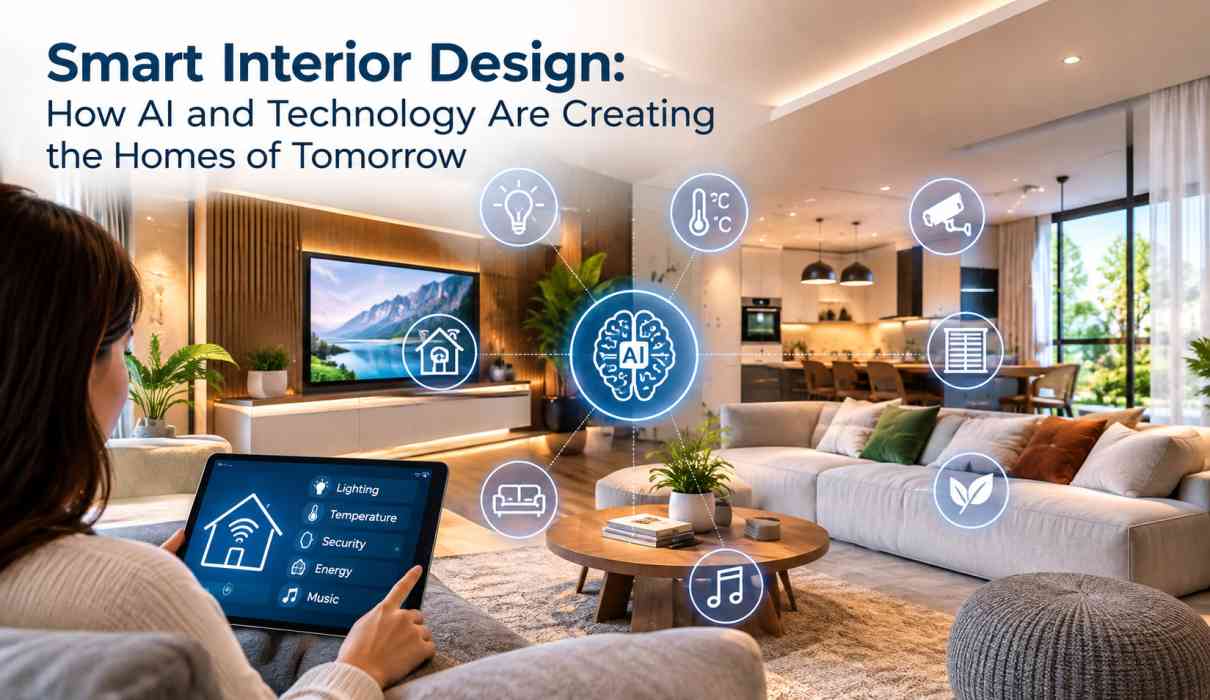
Smart Interior Design: How AI and Technology Are Creating the Homes of Tomorrow
The way people design and experience their homes is changing rapidly. Interior design is no longer limited to selecting furniture, wall colors, lighting fixtures, and decorative accessories. Today, artificial intelligence (AI), smart home technology, automation, connected devices, and digital design tools are becoming important parts of modern residential interiors.
This transformation is giving homeowners more ways to create spaces that are comfortable, personalized, energy-efficient, and functional. From AI-powered design recommendations to intelligent lighting and automated climate control, technology is helping turn traditional houses into responsive living environments.
The rise of smart interior design represents a shift toward homes that can understand preferences, automate everyday tasks, and adapt to changing needs. As technology becomes more accessible, the homes of tomorrow are likely to combine beautiful design with intelligent functionality.
What Is Smart Interior Design?
Smart interior design combines traditional interior design principles with modern technology. The goal is not simply to fill a home with connected devices. Instead, technology is integrated into the design so that it improves comfort, convenience, efficiency, safety, and the overall living experience.
A smart interior may include automated lighting, connected appliances, smart thermostats, motorized curtains, voice-controlled systems, intelligent security devices, and AI-powered design applications.
The most successful smart interiors make technology feel natural rather than intrusive. Devices can be hidden within walls, ceilings, cabinets, furniture, or architectural features. This creates a clean environment while still providing advanced functionality.
For homeowners, this means interior design can become both visually attractive and technologically intelligent.
How AI Is Changing Interior Design
Artificial intelligence is one of the most important technologies influencing modern interior design. AI-powered tools can analyze room dimensions, furniture preferences, color combinations, design styles, and lifestyle requirements to generate personalized recommendations.
Instead of spending hours creating multiple design concepts, homeowners and designers can use AI to explore different possibilities quickly.
For example, an AI interior design tool may analyze a photograph of a living room and suggest several layouts. It can recommend furniture placement, color palettes, lighting ideas, decorative elements, and different design styles.
AI can also help users visualize potential changes before making expensive purchases. A homeowner can experiment with modern, minimalist, Scandinavian, industrial, or traditional interiors digitally before deciding which direction works best.
This makes the design process faster and more accessible.
Personalized Home Design With AI
One of the biggest advantages of AI in interior design is personalization.
Traditional interior design often relies on general design principles and the preferences of the homeowner. AI can take personalization much further by considering individual lifestyles and habits.
For example, a family with young children may benefit from durable furniture, rounded edges, easy-to-clean surfaces, and organized storage. A remote worker may need a dedicated home office with appropriate lighting, acoustic solutions, and ergonomic furniture.
Similarly, someone who enjoys entertaining guests may want an open-plan living and dining area, flexible seating, and smart entertainment systems.
AI can analyze these requirements and help create a design that reflects how people actually use their homes.
Smart Lighting for Modern Interiors
Lighting is becoming one of the most important elements of smart interior design.
Traditional lighting generally requires manual control. Smart lighting systems can automatically adjust brightness, color temperature, and schedules based on user preferences, time of day, or activity.
For example, bright, cool lighting can be used during working hours, while warmer and softer lighting can create a relaxing atmosphere in the evening.
Smart lighting can also be integrated with motion sensors. Lights can automatically switch on when someone enters a room and turn off when the room becomes empty.
Beyond convenience, intelligent lighting can contribute to energy efficiency by reducing unnecessary electricity consumption.
Interior designers can incorporate smart lighting into ceilings, walls, furniture, shelves, and architectural features to create both functional and decorative effects.
AI and Smart Furniture
Furniture is also becoming more technologically advanced.
Smart furniture can combine traditional functionality with features such as wireless charging, integrated lighting, adjustable settings, hidden storage, and connectivity.
For example, a modern bedside table may include wireless charging for smartphones. A home office desk can provide cable management and integrated power outlets. Adjustable smart beds can monitor sleep-related patterns and provide personalized settings.
Technology can also help homeowners choose furniture that fits their available space. AI-powered visualization tools can show how a particular sofa, table, bed, or storage unit might look in a room before it is purchased.
This can reduce design mistakes and make furniture selection more efficient.
Smart Home Automation and Interior Design
Smart home automation is becoming an essential component of modern interiors.
Connected systems can control multiple functions through a smartphone, tablet, voice assistant, or centralized home automation platform.
Homeowners may control:
- Lighting
- Temperature
- Curtains and blinds
- Entertainment systems
- Security devices
- Door locks
- Appliances
- Irrigation systems
- Air-quality monitoring
The important trend is that these technologies are increasingly being integrated into the interior design itself.
Instead of placing visible switches and devices everywhere, designers can create discreet control panels and concealed technology solutions.
The result is a home that maintains a clean aesthetic while providing sophisticated automation.
Smart Kitchens: Where Design Meets Technology
The kitchen is another area where technology is transforming interior design.
Smart appliances can provide greater convenience and efficiency. Connected refrigerators, ovens, dishwashers, coffee machines, and other appliances can be monitored and controlled through digital systems.
AI can also contribute to kitchen planning. Design software can analyze available space and suggest efficient layouts based on cooking habits, storage requirements, and appliance placement.
Smart kitchens may include automated lighting, touchless faucets, intelligent ventilation, energy-monitoring systems, and voice-controlled appliances.
The future kitchen is therefore likely to become more than a cooking space. It can function as a connected environment designed around convenience, efficiency, and everyday routines.
Sustainable Smart Interior Design
Technology is not only making homes smarter; it can also help make them more sustainable.
Energy-monitoring systems allow homeowners to understand how much electricity different appliances and systems consume. Smart thermostats can adjust heating or cooling according to occupancy and preferences.
Automated lighting can reduce unnecessary energy use, while smart appliances can optimize their operation.
At the same time, sustainable interior design is becoming increasingly important. Designers are incorporating recycled materials, responsibly sourced wood, low-impact finishes, natural fabrics, energy-efficient lighting, and durable furniture.
The combination of smart technology and sustainable materials creates an opportunity for homeowners to build interiors that are both modern and environmentally responsible.
Smart Climate Control
Temperature has a major influence on comfort inside a home. Smart climate-control systems can make temperature management more responsive.
Instead of maintaining the same temperature throughout the day, intelligent systems can adjust settings according to schedules, room occupancy, outdoor conditions, and personal preferences.
Different areas of a home can also have different temperature settings.
For example, a bedroom can be kept comfortable during sleeping hours while unused areas receive less heating or cooling.
When combined with good insulation, efficient windows, and thoughtful interior planning, smart climate control can improve comfort while potentially reducing energy consumption.
Technology-Driven Home Offices
The growth of remote and hybrid work has increased the importance of home office design.
A modern home office needs more than a desk and chair. It should provide appropriate lighting, ergonomic support, storage, connectivity, and acoustic comfort.
Smart interior design can help create workspaces that adapt throughout the day.
Automated lighting can provide suitable illumination for different tasks. Motorized blinds can control glare. Smart climate systems can maintain comfortable temperatures, while integrated charging stations can reduce cable clutter.
AI can also help homeowners plan office layouts based on available space and work requirements.
This makes technology an important part of creating productive and comfortable home offices.
AI-Powered Visualization and Virtual Design
One of the most exciting developments in interior design is the ability to visualize spaces digitally.
AI-powered design platforms and 3D visualization tools can help homeowners see potential interiors before construction or renovation begins.
A basic room can be transformed digitally into multiple design concepts. Users can experiment with colors, furniture arrangements, flooring, wall treatments, lighting, and decorative styles.
Virtual visualization can reduce uncertainty and help homeowners communicate their ideas more effectively with interior designers, architects, and contractors.
It can also make the design process more collaborative because everyone can view the same proposed concept.
Smart Storage Solutions
Storage is a major challenge in modern homes, particularly in urban environments where living spaces may be limited.
Technology can support more efficient storage planning.
AI-based design systems can analyze room dimensions and recommend customized storage solutions. Built-in wardrobes, modular cabinets, hidden compartments, and multifunctional furniture can maximize available space.
Smart storage can also include automated features such as motorized shelves or electronically controlled access systems.
The goal is to create interiors that remain organized without sacrificing visual appeal.
Biophilic Design and Smart Technology
Technology does not mean homes have to become cold or artificial.
A growing design approach combines smart technology with biophilic interior design, which focuses on bringing natural elements into living spaces.
Natural wood, indoor plants, stone, natural textures, daylight, and earthy materials can create a calming environment.
Smart irrigation systems can automatically water indoor plants. Intelligent lighting can support different lighting conditions throughout the day, while sensors can monitor indoor air quality.
This combination creates homes that use technology to support a stronger connection with nature.
Smart Security and Privacy
Security is another major area where connected technology is influencing interior design.
Smart locks, video doorbells, motion sensors, indoor cameras, and alarm systems can provide homeowners with greater control over residential security.
However, privacy should remain an important consideration. Connected devices can collect information, so homeowners should use strong passwords, secure networks, software updates, and privacy-conscious settings.
Interior designers and technology providers should also consider where devices are installed and how they affect the privacy of different rooms.
Smart design should improve security without compromising personal comfort.
The Role of Interior Designers in the Smart Home Era
Technology is not replacing interior designers. Instead, it is changing their role.
Modern interior designers increasingly need to understand both aesthetics and technology. They may work with smart-home specialists, electricians, architects, lighting designers, and technology providers to create integrated environments.
The designer’s job is to ensure that technology supports the overall design rather than becoming an unwanted distraction.
A successful smart home should still feel warm, comfortable, personal, and visually appealing.
Technology should work quietly in the background while the homeowner enjoys the results.
Challenges of Smart Interior Design
Despite its advantages, smart interior design comes with challenges.
Cost is one of the most obvious considerations. Advanced automation systems can require significant investment, especially during large renovations.
Compatibility is another issue. Different smart devices may use different platforms and communication standards. Homeowners should consider whether their chosen products can work together.
Maintenance and software updates are also important. Technology can become outdated, meaning homeowners may eventually need to replace or upgrade certain systems.
Privacy and cybersecurity should not be ignored either.
For these reasons, smart interior design should be planned carefully rather than based on adding as many connected devices as possible.
The Future of Smart Interior Design
The future of interior design will likely be increasingly adaptive.
Homes may become better at understanding routines and responding automatically to changing needs. AI could help optimize energy use, lighting, temperature, entertainment, and room layouts with less manual interaction.
Personalized design recommendations may become more sophisticated as AI systems learn about individual preferences.
At the same time, sustainable materials and energy-efficient technologies are likely to become more important.
The most successful homes of the future will not necessarily be the ones with the most technology. Instead, they will be the ones where technology is intelligently integrated into everyday life.
Conclusion
Smart interior design is changing the way people think about modern homes. AI, automation, connected devices, intelligent lighting, smart furniture, digital visualization, and energy-management systems are creating new possibilities for residential interiors.
The biggest opportunity is not simply making homes more technologically advanced. It is making them more personal, comfortable, efficient, sustainable, and responsive.
As technology continues to evolve, homeowners will have more tools to design spaces around their lifestyles. Interior designers will increasingly combine creativity with digital intelligence to create environments that look beautiful and work intelligently.
The home of tomorrow will therefore be more than a collection of rooms. It will be a connected living environment that can adapt to its occupants while supporting comfort, productivity, sustainability, and wellbeing.
For homeowners planning a renovation or new property, smart interior design offers an exciting opportunity: a home where modern technology and thoughtful design work together to create a better everyday living experience.